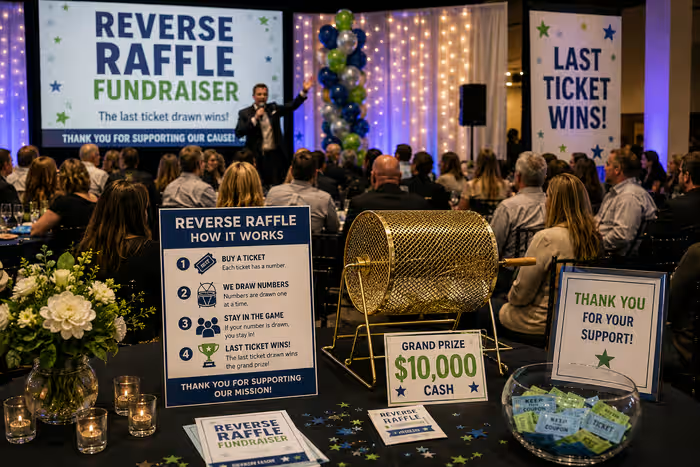
A reverse raffle is a fun twist on the usual raffle, and one of the more engaging formats a nonprofit can run. Instead of drawing a single winner, you work backwards. Ticket numbers are drawn and knocked out one at a time, round after round, until just one ticket is left standing. That final ticket wins the grand prize. Because the field slowly narrows, the tension builds as the event goes on.
A normal raffle is over in a moment: one draw, one winner, done. A reverse raffle stretches the excitement across the whole event. Each time a number is called and eliminated, everyone still holding a ticket has a slightly better chance of winning, so interest keeps climbing instead of fading after a single announcement. That steady build is what sets a reverse raffle apart from an ordinary one, and it keeps the room paying attention right to the end.
It also turns supporters from onlookers into players. People are far more invested when their own ticket is still in the running, and the drama of each elimination gives everyone something to talk about, cheer for, and share with friends. That shared anticipation, all the way to the final winner, is a big part of why reverse raffles can lift attendance and engagement, and why supporters tend to remember them.
What Exactly Is a Reverse Raffle Fundraiser?
Reverse raffles feature progressive ticket elimination processes where randomly selected ticket numbers are systematically announced and removed from competition until only single winning ticket remains.
Core Reverse Raffle Mechanics and Definition
1. Progressive Ticket Elimination Concept
Organizations sell raffle tickets to supporters who retain tickets throughout events. At predetermined intervals, organizers publicly draw and announce specific ticket numbers for elimination, progressively removing these numbers from remaining competition. With each announcement, fewer tickets remain in the drawing pool, increasing surviving ticket holders' winning probabilities.
2. Building Dramatic Tension Through Escalation
Early elimination rounds remove many tickets quickly, establishing momentum. Middle rounds maintain consistent elimination pacing. Final elimination rounds progressively narrow participant pool to mere handful of tickets creating intense, climactic atmosphere. Each surviving round increases emotional investment and winning probability perception.
3. Single Final Winner Designation
Drawing concludes when only one ticket number remains. This final surviving ticket holder wins designated grand prize—the dramatic prize claim moment creates memorable experience for winner and audience. Clear, definitive conclusion provides satisfying resolution and celebration opportunity.
4. Distinction from Traditional Raffles
Standard raffles conduct single drawing selecting winning ticket immediately. Reverse raffles utilize multiple sequential drawings progressively eliminating non-winners rather than selecting winners directly. This inverse approach—eliminating losers rather than selecting winners—creates the distinctive "reverse" framework distinguishing format from traditional mechanics.
5. Enhanced Audience Engagement Pattern
Traditional raffles occupy brief announcement periods. Reverse raffles sustain audience engagement throughout entire event durations through extended elimination processes. Sustained engagement increases secondary revenue opportunities and organizational mission communication capabilities.
Why Nonprofit Organizations Strategically Choose Reverse Raffle Formats
Multiple compelling advantages drive nonprofit adoption of reverse raffle programming despite additional complexity compared to traditional approaches.
Strategic Advantages Driving Format Selection
1. Creates Sustained Excitement and Dramatic Tension
Progressive elimination builds cumulative excitement throughout events. Unlike single-moment traditional raffle announcements, reverse formats maintain tension across extended timeframes. Supporters emotionally invest in ticket survival creating anticipation and engagement distinguishing this format fundamentally.
2. Keeps Guests Engaged Throughout Entire Events
Extended elimination timelines maintain participant focus on fundraising activities. Supporters remain present and attentive throughout events rather than departing after initial raffle announcements. Sustained engagement increases organizational mission communication opportunities and secondary purchase participation.
3. Encourages Increased Event Attendance
The interactive, dramatic format appeals to supporters seeking memorable entertainment experiences. Reverse raffle reputation attracts supporters specifically attending events for format participation rather than passive attendance. Increased attendance translates to expanded secondary revenue opportunities and mission engagement.
4. Creates Memorable Fundraising Experiences
Dramatic final moments and celebration experiences become conversation topics supporters discuss and share within networks. Memorable formats generate word-of-mouth promotion amplifying campaign visibility. Supporters often participate in future fundraising specifically because of positive reverse raffle experiences.
5. Performs Excellently for Gala and Formal Events
Reverse raffles add entertainment dimension to formal fundraising galas, sustaining participant engagement during lengthy events. Professional presentation formats complement upscale event contexts. Formal settings enhance perception of legitimacy and organizational professionalism.
6. Generates Organic Conversation and Social Engagement
The dramatic, unpredictable format naturally encourages supporter discussion and social media sharing. Elimination announcements prompt conversation among supporters, amplifying campaign engagement beyond direct raffle participation. Social media sharing exponentially extends campaign visibility.
Step 1: Strategic Planning and Reverse Raffle Design
Systematic planning approaches establish foundations ensuring professional execution and optimized fundraising outcomes.
Essential Step 1 Planning Components
1. Establish Clear Fundraising Goals and Financial Targets
Define specific revenue objectives guiding ticket quantity and pricing decisions. Determine whether reverse raffle represents primary fundraising mechanism or event component. Establish realistic financial projections based on comparable past events or industry benchmarks. Clear targets enable appropriate ticket pricing and promotional intensity calibration.
2. Determine Optimal Ticket Quantity and Sales Volume
Calculate ticket quantities supporting elimination timelines of 1-3 hours preventing excessively rapid or prolonged drawing processes. General guidelines: 200-500 tickets for community events, 500-1,500 tickets for mid-size galas, 1,500-5,000+ for major fundraising galas. Higher ticket quantities enable longer, more dramatic elimination sequences.
3. Establish Strategic Ticket Pricing Framework
Price tickets at 5-20% of projected grand prize value enabling supporters to perceive favorable risk-reward ratios. $500 grand prize typically supports $25-100 ticket pricing. Higher-value prizes justify proportionally higher ticket costs. Consider segmented pricing (single tickets, multi-ticket bundles) encouraging volume purchases.
4. Select Grand Prize Aligning with Budget and Audience
Feature substantial prizes justifying ticket investment and participation enthusiasm. Appropriate prizes: $1,000-5,000+ cash awards, luxury vacation experiences, premium gift packages. Prize selection significantly influences ticket sales volumes and overall fundraising outcomes.
5. Determine Event Format and Execution Timeline
Decide whether reverse raffle operates during specific event segment or comprises entire fundraising program. Determine elimination schedule (announcements every 1-2 minutes, or longer intervals). Plan total event duration supporting elimination process completion within reasonable timeframes.
6. Establish Budget for Event Execution and Prize Costs
Calculate total costs including grand prize, volunteer compensation (if applicable), promotional materials, technology infrastructure, and contingency reserves. Ensure budget allocation supports professional execution and quality participant experiences. Cost analysis should inform ticket pricing strategy.
Step 2: Strategic Ticket Sales and Participant Acquisition
Professional ticket sales approaches maximize participation across diverse channels and supporter segments.
Comprehensive Ticket Sales Implementation
1. Implement Professional Online Ticket Sales PlatformsUtilize dedicated online raffle ticket sales systems enabling remote supporters to purchase tickets conveniently. Ensure platforms support mobile purchasing, diverse payment methods, and real-time transaction processing. Professional platforms dramatically expand reach compared to physical-only ticket distribution.
2. Develop Printed Physical Ticket Distribution Channel
Produce professional printed tickets for in-person event sales. Create organized systems for ticket inventory management, transaction tracking, and payment processing. Train event staff on efficient ticket sales processes maximizing transaction speed and participant satisfaction.
3. Launch Early Bird Promotional Pricing
Offer discounted early-purchase tickets encouraging advance sales. Early bird promotions build momentum, provide advance revenue forecasting, and reward early supporters. Typical structure: regular price $25, early bird price $20 (20% discount) for first 100 tickets sold.
4. Develop Sponsorship and Partnership Opportunities
Coordinate with local businesses for raffle sponsorships involving donated prizes, ticket purchasing, or promotional support. Sponsorship approaches reduce organizational costs while building community relationships. Feature sponsors prominently in marketing materials and event materials ensuring visibility justifying partnership investment.
5. Establish Comprehensive Ticket Tracking Systems
Maintain detailed records of all ticket sales including buyer information, ticket numbers, purchase dates, and payment confirmations. Digital systems enable real-time tracking, comprehensive reporting, and accurate drawing administration. Ticket tracking prevents duplicate sales and ensures accurate participant management.
6. Communicate Clear Sales Deadlines and Cut-Off Processes
Establish and promote firm ticket sales deadlines ensuring adequate time for drawing preparation. Communicate deadlines through multiple channels (email, social media, event signage) preventing last-minute confusion. Clear deadlines enable organized drawing processes and participant communication.
For detailed ticket pricing strategy guidance, consult comprehensive pricing analysis resources addressing diverse nonprofit contexts and supporter demographics.
Step 3: Professional Drawing Preparation and Administration
Systematic preparation ensures fair, transparent, and trustworthy drawing execution.
Essential Drawing Preparation Components
1. Implement Clear, Consistent Ticket Numbering Systems
Assign sequential numbers to each ticket (1-500, for example) enabling quick identification during announcements. Simple numbering prevents confusion during rapid elimination announcements. Maintain master lists enabling quick reference during drawing operations.
2. Establish Random Elimination Methodology
Document drawing procedures ensuring genuine randomization without manipulation. Methods include: randomization software, documented drawing from sealed envelopes, public witness verification. Transparent processes build participant confidence in fairness and legitimacy.
3. Create Large, Visible Elimination Display Systems
Prepare methods for displaying eliminated ticket numbers enabling all participants to see results simultaneously. Large electronic displays, projectors, or manual boards work effectively. Clear visibility prevents confusion and demonstrates transparency throughout drawing process.
4. Maintain Transparent Process Documentation
Record all elimination results creating permanent documentation enabling verification and dispute resolution. Document drawing procedures, randomization methodologies, and winner selection processes. Comprehensive documentation protects organizational integrity and demonstrates professionalism.
5. Train Drawing Administration Volunteers
Ensure volunteers understand complete drawing procedures, ticket numbering systems, elimination order, and contingency protocols. Comprehensive training enables confident, accurate administration preventing errors or confusion. Test volunteer readiness through practice rehearsals before actual events.
6. Communicate Clear Rules to All Participants
Before drawing commencement, explain complete raffle rules including elimination procedures, winning conditions, and winner claim processes. Written rules distributed before events prevent confusion and establish baseline participant understanding. Clear communication builds confidence in process legitimacy.
Step 4: Hosting Professional Reverse Raffle Events
Strategic event hosting transforms mechanical drawing processes into memorable, engaging experiences.
Essential Event Hosting Components
1. Introduce Format Comprehensively Before Drawing Commencement
Begin events with clear, enthusiastic explanation of reverse raffle format, rules, and winning processes. Explain why format differs from traditional raffles. Answer participant questions addressing concerns. Comprehensive introduction establishes baseline understanding preventing confusion throughout events.
2. Build Excitement Through Engaging Host Delivery
Select confident, charismatic host delivering announcements with enthusiasm and energy. Use dramatic language building anticipation ("We're down to 300 remaining tickets!"). Professional hosting creates entertainment value and audience engagement.
3. Announce Eliminated Numbers Clearly and Prominently
Deliver elimination announcements in clear voice audible to all participants. Display numbers prominently on screens and physical displays. Announce multiple times ensuring all supporters receive information. Clarity prevents confusion and maintains transparent process perception.
4. Maintain Consistent Event Pacing and Momentum
Establish announcement intervals of 1-2 minutes preventing excessive delays. Strategic pacing maintains excitement without allowing tension to dissipate. Consistent timing enables participant adjustment and engagement stabilization.
5. Encourage Active Audience Participation
Promote audience cheering for surviving tickets, creating communal excitement. Develop celebration rituals (bell ringing, chants) for each elimination round. Active participation transforms passive observation into engaging community experience.
6. Reveal Final Winner with Dramatic Celebration
Create memorable final announcement celebrating winner selection. Feature winner prominently for photographs and acknowledgment. Professional celebration reinforces positive experience and creates memorable moments supporters discuss afterward.
Common Reverse Raffle Mistakes: Prevention and Solutions
Understanding frequent implementation errors enables organizations to prevent complications and optimize execution.
Critical Mistakes and Remediation Strategies
1. Poor Format Explanation or Participant Confusion
Problem: Unclear rules or inadequate format explanation leaves supporters confused regarding mechanics and winning conditions.
Solution: Develop comprehensive written rules. Conduct thorough pre-drawing explanation. Answer participant questions. Distribute written materials clarifying processes.
2. Eliminating Tickets Too Rapidly
Problem: Aggressive elimination rates deplete participant pools too quickly, undermining dramatic tension and engagement.
Solution: Front-load eliminations (40-50% first round) then progressively reduce elimination rates. Plan elimination scheduling ensuring 1-3 hour event duration.
3. Weak Prize Selection or Unappealing Offerings
Problem: Uninspiring prizes fail to motivate participation regardless of excellent format execution.
Solution: Survey supporters identifying genuine interests. Feature substantial, recognizable prizes. Ensure prize value justifies ticket investment. Describe prizes compellingly in promotional materials.
4. Confusing or Inconsistent Numbering and Display
Problem: Unclear ticket identification systems create confusion during rapid announcements.
Solution: Use simple sequential numbering. Display numbers prominently and repeatedly. Maintain clear visual presentations enabling participant verification.
5. Technical Equipment Failures or Internet Issues
Problem: Malfunctioning microphones, unreliable displays, or connectivity issues disrupt professional presentation.
Solution: Test all equipment thoroughly before events. Have backup equipment available. Assign technician monitoring systems during events.
6. Inadequate Audience Engagement or Passive Experience
Problem: Mechanical announcements without audience participation create uninspiring experiences.
Solution: Encourage cheering and celebration. Develop participation traditions. Feature live entertainment between eliminations. Create energetic, engaged atmosphere.
Reverse Raffle Best Practices: Optimization Strategies
Strategic implementation approaches consistently produce superior outcomes and participant satisfaction.
Essential Best Practices Framework
1. Keep Drawing Moving with Efficient Pacing
Maintain consistent 1-2 minute announcement intervals sustaining momentum without becoming overwhelming. Plan announcement sequences in advance. Use timers ensuring consistent pacing throughout events. Efficient pacing maintains engagement and prevents fatigue.
2. Select Confident, Professional Drawing Host
Choose host with strong communication skills, enthusiasm, and comfort with public speaking. Confident delivery substantially influences audience perception of professionalism. Professional hosting creates entertainment value and engagement.
3. Display Eliminated Numbers Clearly and Repeatedly
Use large displays visible from all event areas. Announce numbers verbally, display visually, and repeat information. Triple-redundancy prevents confusion and builds transparency perception.
4. Conduct Comprehensive Pre-Event Equipment Testing
Test all technology 1-2 hours before events. Verify audio quality, display functionality, and drawing systems. Identify and resolve issues before participant arrival. Backup systems should be available for critical functions.
5. Encourage Audience Participation and Celebration
Create participation opportunities enabling supporters to cheer, celebrate, and engage emotionally. Develop traditions for each elimination. Active engagement transforms events into community experiences rather than mechanical drawings.
6. Celebrate Winner with Professional Recognition
Make final winner announcement memorable and celebratory. Feature winner prominently for photographs. Acknowledge contributions and participation publicly. Professional celebration reinforces positive experiences and creates memorable moments.
Reverse Raffle Planning and Execution Checklist
Comprehensive preparation ensures systematic implementation across all operational components and participant touchpoints.
Complete Planning and Execution Protocol
1. Strategic Planning and Concept Development Phase
- [ ] Fundraising goals and revenue targets established
- [ ] Grand prize selected and secured
- [ ] Target ticket quantity determined
- [ ] Ticket pricing strategy established
- [ ] Event format and timeline finalized
- [ ] Budget allocation confirmed
- [ ] Volunteer recruitment begun
2. Ticket Sales Development and Launch
- [ ] Online ticket sales platform activated and tested
- [ ] Printed ticket design finalized and produced
- [ ] Early bird promotional pricing established
- [ ] Sponsorship opportunities developed
- [ ] Sales deadline communicated clearly
- [ ] Tracking systems established
- [ ] Payment processing verified
3. Rules Development and Documentation
- [ ] Comprehensive raffle rules documented
- [ ] Elimination procedures clearly defined
- [ ] Winning conditions explicitly stated
- [ ] Winner verification processes documented
- [ ] Raffle rules and terms guide consulted for compliance
- [ ] Rules published in promotional materials
- [ ] Contingency protocols established
4. Drawing Preparation and Equipment Setup
- [ ] Ticket numbering system finalized
- [ ] Randomization methodology selected and tested
- [ ] Drawing software or mechanical systems tested
- [ ] Display equipment secured and tested
- [ ] Audio systems verified for clarity
- [ ] Recording equipment arranged if applicable
- [ ] Backup systems activated and tested
5. Volunteer Training and Preparation
- [ ] Volunteer team recruited with specific roles
- [ ] Comprehensive training provided on procedures
- [ ] Rules training ensuring consistent communication
- [ ] Equipment operation training completed
- [ ] Emergency protocol training conducted
- [ ] Communication procedures established
- [ ] Practice rehearsals completed
6. Promotion and Participant Communication
- [ ] Campaign launch email sent to supporter database
- [ ] Social media promotional content scheduled
- [ ] Event details shared through comprehensive planning framework
- [ ] Promotional materials emphasize format uniqueness
- [ ] Ticket sales page optimized for conversions
- [ ] Reminder emails scheduled for event day
- [ ] Word-of-mouth promotion encouraged
7. Event Day Setup and Final Preparations
- [ ] Venue setup completed with seating arranged
- [ ] Technology testing completed 1-2 hours before event
- [ ] All volunteers positioned and briefed
- [ ] Drawing system final verification completed
- [ ] Rules announcement prepared and rehearsed
- [ ] Drawing materials organized for accessibility
- [ ] Winner announcement process finalized
8. Post-Event Follow-Up and Celebration
- [ ] Winner congratulated and photographed
- [ ] Prize delivery arranged and scheduled
- [ ] Thank-you communications sent within 24 hours
- [ ] Thank-you social media posts published
- [ ] Event photos shared and promoted
- [ ] Supporter feedback collected and analyzed
- [ ] Success metrics documented for future planning
Frequently Asked Questions: Reverse Raffle Strategy and Implementation
Question: What exactly is a reverse raffle fundraiser?
Answer: Reverse raffles are progressive elimination-style fundraisers where ticket holders watch randomly selected ticket numbers systematically removed from competition through sequential drawing rounds. Rather than drawing to select winners (traditional approach), reverse raffles draw to eliminate non-winners. Each drawing round removes additional tickets from competition, increasing remaining ticket holders' winning probabilities. The final remaining ticket wins designated grand prize. Extended elimination timelines maintain participant engagement throughout entire events creating dramatic, memorable experiences.
Recommendation: Choose reverse raffle format when seeking to maximize participant engagement and create memorable fundraising experiences, particularly for gala and formal events.
Question: How does reverse raffle format differ from traditional raffle approaches?
Answer: Traditional raffles conduct single random drawing selecting winning ticket directly. Reverse raffles conduct multiple sequential drawings progressively eliminating non-winning tickets rather than selecting winners. Traditional raffles occupy brief announcement periods (5-10 minutes). Reverse raffles extend across 1-3 hours creating sustained engagement. Traditional draws create single excitement moment. Reverse draws build progressive dramatic tension. Reverse format maintains audience focus throughout entire events while traditional raffles typically complete during brief announcement segments.
Recommendation: Select reverse raffle format for events emphasizing extended participant engagement and interactive experiences.
Question: How many tickets should organizations typically sell?
Answer: Optimal ticket quantities depend on target event duration and elimination scheduling preferences. General guidelines: 200-500 tickets for community events (1-2 hour eliminations), 500-1,500 tickets for mid-size galas (2-3 hour events), 1,500-5,000+ tickets for major fundraising galas (extended events). Ticket quantities should support elimination timelines of 1-3 hours maintaining engagement without excessive event duration. Higher quantities enable longer, more dramatic elimination sequences.
Recommendation: Calculate ticket quantities supporting target event duration of 1-3 hours with consistent 1-2 minute announcement intervals.
Question: What prize types work most effectively for reverse raffles?
Answer: Most effective prizes feature substantial perceived value justifying ticket investment and participation enthusiasm. Successful prize categories: substantial cash awards ($500-5,000+), luxury vacation packages generating emotional appeal, experience prizes (spa retreats, dining experiences), premium gift packages combining multiple items. Avoid prizes with limited appeal, uncertain value, or niche-specific utility. Strong prizes substantially increase ticket sales volumes and participant engagement regardless of other execution factors.
Recommendation: Feature diverse prize types appealing to varied supporter preferences. Prioritize substantial, recognizable prizes over generic offerings.
Question: Can reverse raffles operate successfully through online platforms?
Answer: Yes—reverse raffle formats transition effectively to digital platforms through online raffle management systems enabling remote elimination announcements. Digital approaches send email or push notifications announcing eliminations, enabling supporter participation from anywhere. Online formats dramatically expand geographic reach compared to in-person events. Digital drawing announcements can follow in-person event pacing or operate independently. Hybrid approaches combining in-person events with online participants maximize reach and engagement.
Recommendation: Implement online reverse raffle formats for geographically distributed supporter bases. Consider hybrid approaches combining in-person events with simultaneous online participation.
Question: Are reverse raffles legal for nonprofit fundraising?
Answer: Reverse raffle legality varies significantly by jurisdiction, state, province, and local regulations. Some regions permit raffles under specific conditions including nonprofit status, licensing requirements, or age restrictions. Other jurisdictions strictly prohibit raffle activities. Organizations must verify local regulations through governmental agencies, legal counsel, or nonprofit resource organizations before proceeding with reverse raffle campaigns. Consulting qualified legal counsel familiar with specific jurisdictional requirements protects organizations from regulatory violations.
Recommendation: Verify local raffle regulations with governmental agencies or qualified legal counsel before launching reverse raffle campaigns. Document compliance procedures demonstrating regulatory adherence.
Successfully Execute Reverse Raffle Fundraisers Through Professional Planning
Organizations implementing thoughtful reverse raffle programming achieve superior engagement outcomes and memorable supporter experiences. Strategic planning, clear communication, dramatic presentation, and quality prize curation combine creating exceptional fundraising moments.
Organizations leveraging professional comprehensive raffle planning frameworks integrated with online raffle capabilities maximize reach and impact. Implement professional winner announcement strategies creating memorable, celebration-focused winning moments.
Comprehensive reverse raffle implementation combines engaging format mechanics with thoughtful execution ensuring professional outcomes and maximum fundraising results.
More advice articles about Raffle
About GalaBid
Ideal for donations. Perfect for Raffles. Awesome for Live and Silent Auctions! GalaBid’s online fundraising platform is designed for fundraisers of all types and sizes. For over 10 years we’ve been helping non-profits, charities, community clubs, churches, schools, and individuals to raise more and make a difference.