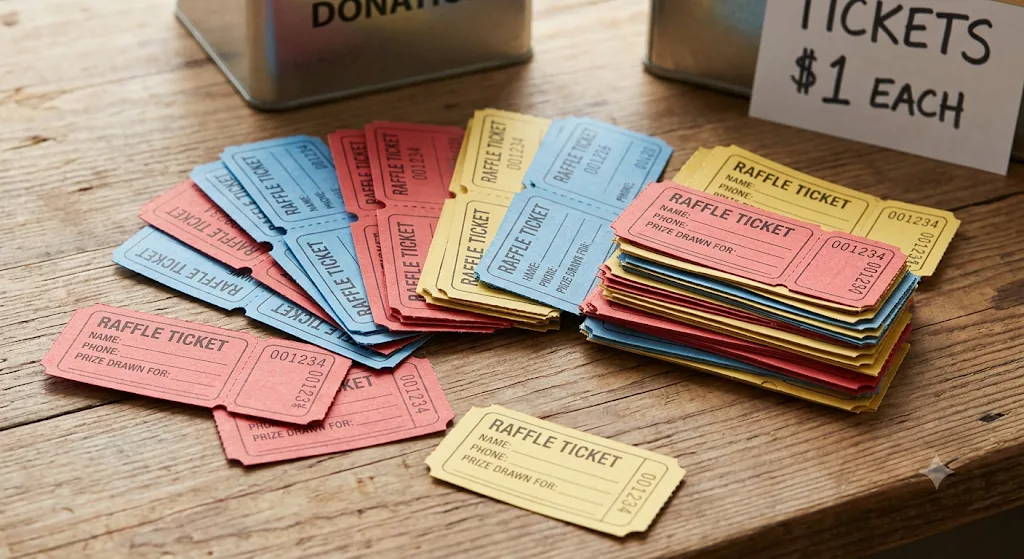
Raffle ticket pricing looks like a small decision and behaves like a big one. Price too high and casual supporters walk past; too low and you leave money with buyers who would happily have paid more; skip the bundle and you cap what your keenest supporters spend. The good news is that raffle pricing follows a few reliable rules, and getting them right takes an evening, not a pricing consultant.
Here is how to work through it.
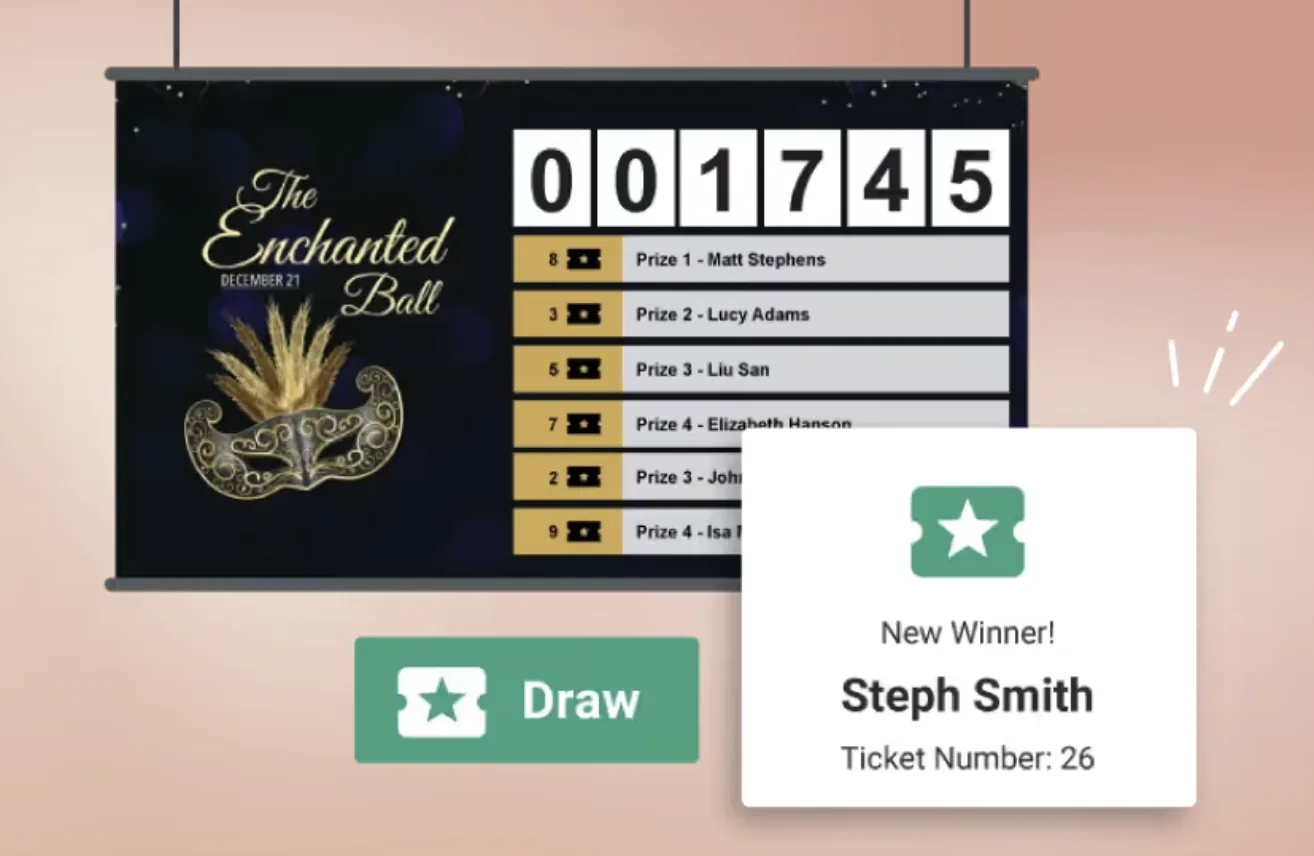
Start with the maths, not the gut
Before choosing a price, put three numbers on paper:
- Prize cost. Zero if donated, which is why donated prizes transform raffle economics; our guide to getting raffle prizes donated is the highest-leverage read on this page. If you purchased prizes, that cost is your floor.
- Revenue target. What the raffle needs to raise for the campaign to be worth running.
- Realistic audience size. How many people will genuinely see the raffle: your list, event attendance, community reach.
Price times tickets-you-can-actually-sell must clear your target comfortably above prize cost. As a working rule, if you purchased prizes, aim for ticket revenue of at least three to five times the prize cost; below that, a quiet week puts the whole campaign at risk. Working the numbers backwards ("we need $6,000, we can reach about 1,500 people, so we need to average $4 per person reached") tells you quickly whether your plan needs a higher price, a bigger audience or a bundle strategy.
Pick a price point people do not have to think about
For community raffles, ticket prices cluster at $2, $5 and $10 for a reason: they are decisions made in seconds, they divide cleanly into bundles, and at in-person events they match the notes in people's pockets. The right point depends on your prize tier and audience:
- $2–$3: school fetes, high-volume community raffles, modest prize pools. Wins on participation.
- $5: the community fundraising workhorse. Meaningful revenue per ticket, still an impulse buy.
- $10+: strong prize pools, gala audiences, and supporter bases with capacity. Fewer buyers, larger average spend.
- $20–$50+: premium raffles with headline prizes (travel, vehicles) and often a capped ticket count, where the pitch is better odds at a serious prize.
The mistake to avoid is pricing to your costs instead of your audience. A $10 ticket at a primary school fete underperforms a $2 ticket, whatever the spreadsheet says, because the buyer there is deciding with pocket change and buying for participation as much as prizes.
Design the bundle before the single
Bundles are where raffle revenue is actually made, because they raise average spend without raising the entry price. The pattern that works:
- Two or three tiers, no more: for a $5 ticket, something like 3 for $12 and 7 for $25.
- A visible saving, not a giveaway: discounts around 15–20% read as generous while protecting revenue. 3 for $10 against a $5 single (33% off) is deeper than you usually need.
- Make the middle tier the obvious pick, and present it first. Buyers choose from what is presented, and the anchored middle option reliably becomes the default.
- Name the top tier for what it is: "best odds" or "supporter pack". The buyers who take it are backing the cause, so let the label say so.
On GalaBid you can offer single tickets and multiple package prices on the same raffle, so the bundle strategy is configuration rather than workaround. One legal note: some jurisdictions have rules about discounted ticket pricing, so confirm bundles are permitted where you operate; our charity raffle legal questions guide covers the basics.
Use the ticket cap as a pricing tool
If you set a total ticket limit, price and cap together define your maximum revenue, and the cap does quiet persuasive work: "1,000 tickets only" tells buyers their odds are real and creates genuine scarcity as the count falls. Premium raffles lean on this hard (fewer tickets, higher price, better stated odds), but even community raffles benefit from a visible cap once sales pass halfway. Displaying remaining tickets on your campaign page turns your pricing structure into a live sales argument.
Time-based pricing: the early bird lever
A limited launch-window deal, a cheaper ticket or a richer bundle in week one, front-loads sales and rewards your fastest supporters. It is the one pricing move with a clock attached, and it deserves its own playbook: see our early bird raffle strategies. The rule that governs it is the same as everywhere else in raffle marketing: the deadline must be real.
Present the price properly
Pricing work is wasted if the page hides it. The ticket price and bundle belong beside the star prize at the top of your campaign page, phrased as the deal it is ("$5 a ticket, 3 for $12"), with the bundle presented first. At in-person events, the price goes on the signage in type readable from walking distance. Our landing page best practices cover the full layout.
Learn your numbers for next time
After the draw, three figures from your platform reports tell you whether the pricing worked: average transaction value, the share of buyers who took a bundle, and sell-through against your cap. Bundle take-up below half suggests the deal was too shallow or buried; a sold-out raffle weeks early suggests the price or cap had headroom. Each campaign's data prices the next one better, which is one more reason the digital raffle's automatic records earn their keep.
The short version
Work the maths backwards from your target. Pick a price your audience spends without thinking. Build a two-or-three tier bundle with the middle anchored. Use the cap and the calendar as levers. Show the deal everywhere. Then read the reports and sharpen it next time.
Set up your raffle free on GalaBid's raffle platform, with single tickets, bundle packages and ticket caps configurable in minutes.