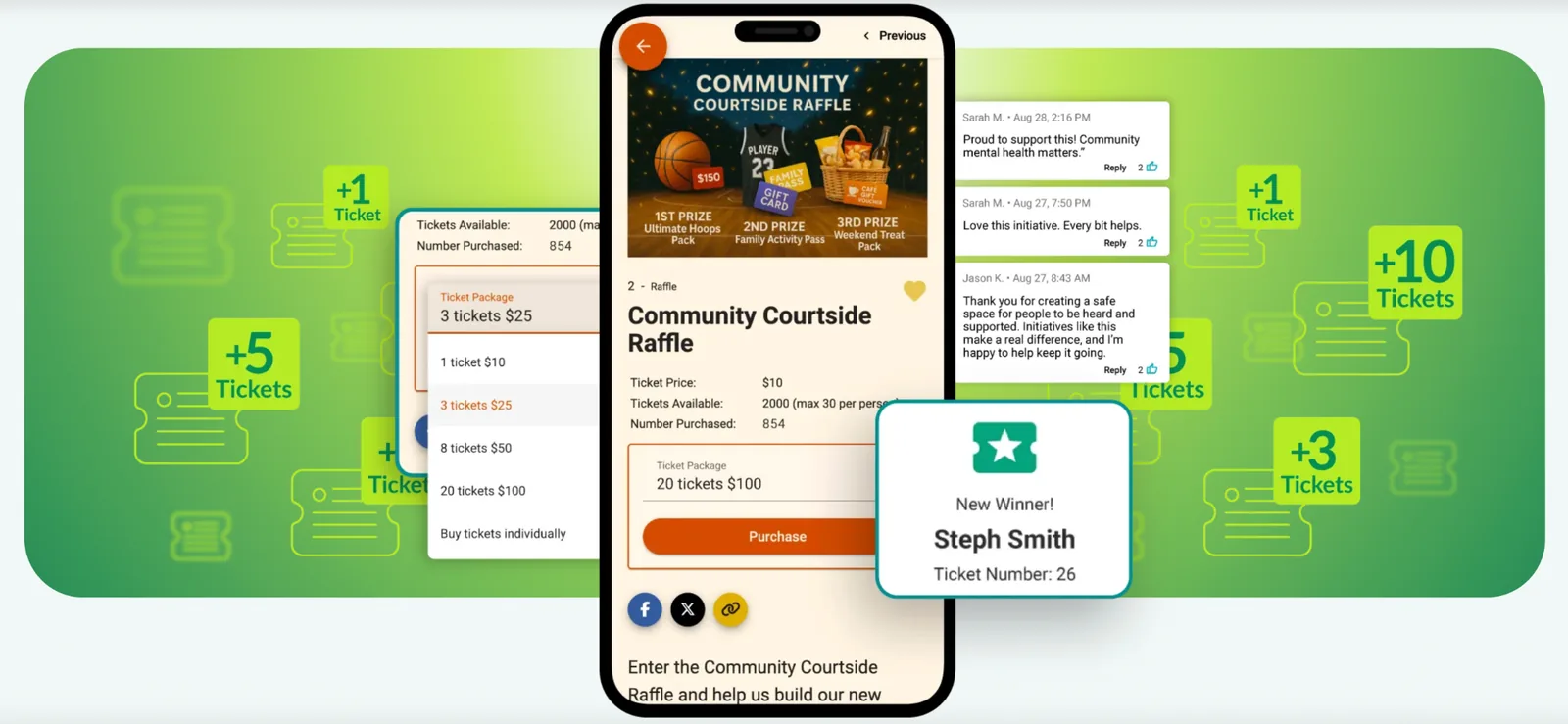
Raffles are one of the most popular fundraising formats for a reason: they are simple, fun and accessible to every supporter. They are also, in almost every country, a form of regulated gambling. That surprises many first-time organisers, and it is why legal questions come up before nearly every raffle.
This guide answers the questions we hear most often from fundraisers. It is general information rather than legal advice, and rules differ significantly between countries, states and provinces, so always confirm the requirements that apply in your location before selling your first ticket.
Do we need a permit or licence to run a charity raffle?
In most places, yes, or at minimum your organisation must qualify for an exemption. Raffles are usually regulated as lotteries, and regulators typically require the organiser to be a registered charity or nonprofit, and to hold a permit, licence or registration depending on the size of the raffle and the value of prizes. Small raffles drawn at a single event are often exempt or covered by lighter rules. Check with your state, provincial or national gambling regulator before launch.
Can we sell raffle tickets online?
In many jurisdictions, yes, but online sales are often treated differently from in-person sales and may need a different class of permit. Some regulators limit online sales to residents of your own state or country. A digital platform makes compliance easier in one respect: every sale, ticket number and purchaser record is captured automatically, giving you a full audit trail.
Can we sell tickets to people in other states or countries?
Usually this is where the tightest restrictions apply. Raffle permits are typically valid only in the issuing jurisdiction, so selling tickets across borders can mean you are running an unlicensed lottery somewhere else. Many organisations state clearly in their raffle terms that tickets are only available to residents of the licensed area. If your supporter base is spread across borders, check whether your permit covers them before promoting widely.
Is there a minimum age to buy a raffle ticket?
Almost always, yes. Because raffles are a form of gambling, most jurisdictions set a minimum purchase age, commonly 16 or 18 depending on location. State the age requirement in your raffle terms and on your campaign page.
Can we offer discounted ticket bundles?
Generally yes, and bundles are one of the most effective ways to raise more per purchaser. Some jurisdictions have rules about how tickets can be priced or discounted, so confirm bundle pricing is permitted where you are. GalaBid supports single tickets and discounted packages, configured in line with local rules.
What is the difference between a raffle, a lottery and a sweepstake?
A raffle is a lottery: entrants pay for a chance to win a prize decided by random draw. That payment element is what triggers gambling regulation. A sweepstake or prize draw with a genuinely free entry route is usually not classed as gambling, which is why commercial promotions use that format. If your fundraiser charges for entry and draws winners at random, treat it as a regulated raffle.
Do we have to publish the odds or number of tickets?
Some jurisdictions require you to state the maximum number of tickets available, the ticket price and the draw date on the ticket or campaign page. Even where it is not required, publishing this information builds trust with supporters. GalaBid lets you set a total ticket limit and display or hide remaining ticket numbers as needed.
How must the draw be conducted?
Regulators generally require the draw to be genuinely random, held on the advertised date, and for winners to be notified and results made available. Digital raffles simplify this: GalaBid uses a certified random number generator, winners are notified automatically by email or SMS the moment they are drawn, and the winning tickets are recorded in your reports.
What records do we need to keep?
Most permits come with record-keeping obligations: tickets sold, gross proceeds, expenses, prize details and winner information, often retained for a set number of years. On GalaBid, the Raffle Tickets and Winners report lists every ticket sold and each winning ticket, and the Payments and Summary reports cover proceeds and costs, so your compliance records are a download rather than a shoebox of ticket stubs.
Are raffle proceeds or prizes taxable?
Rules vary widely. In some countries raffle proceeds are tax-exempt for registered charities, while in others winners may owe tax on significant prizes, and organisations may have reporting obligations for high-value wins. Ticket purchases are generally not tax-deductible donations, because the purchaser receives something in return: a chance to win. Flag this in your terms, and speak to your accountant about obligations in your location.
Can a business run a raffle to raise money for charity?
Often only in partnership with the charity itself. In many jurisdictions raffle permits are only issued to eligible nonprofit organisations, so a business wanting to help usually does so by supporting the charity's raffle with prizes, promotion or sales, rather than running its own. If you are a business with a cause in mind, contact the charity first.
What happens if we get it wrong?
Penalties range from warnings and permit refusals to fines and, for serious breaches, prosecution. In practice, regulators are far more interested in helping community organisations comply than in punishing honest mistakes. The pattern behind most breaches is the same: selling before the permit was issued, selling outside the licensed area, or failing to keep records. All three are avoidable with a few checks before launch.
Quick pre-launch legal checklist
Before selling your first ticket, confirm: your organisation is eligible to run a raffle where you are; whether a permit or licence is needed and that it is issued; where tickets can legally be sold and to whom; any rules on pricing, bundles and maximum tickets; draw date and method requirements; and what records you must keep. We are building a country-by-country compliance checklist that will cover the specifics for each major GalaBid market.
Once the legal groundwork is done, the fun part starts. Set up your raffle in minutes on GalaBid's raffle platform, with certified random draws, automatic winner notification and full compliance reporting built in.