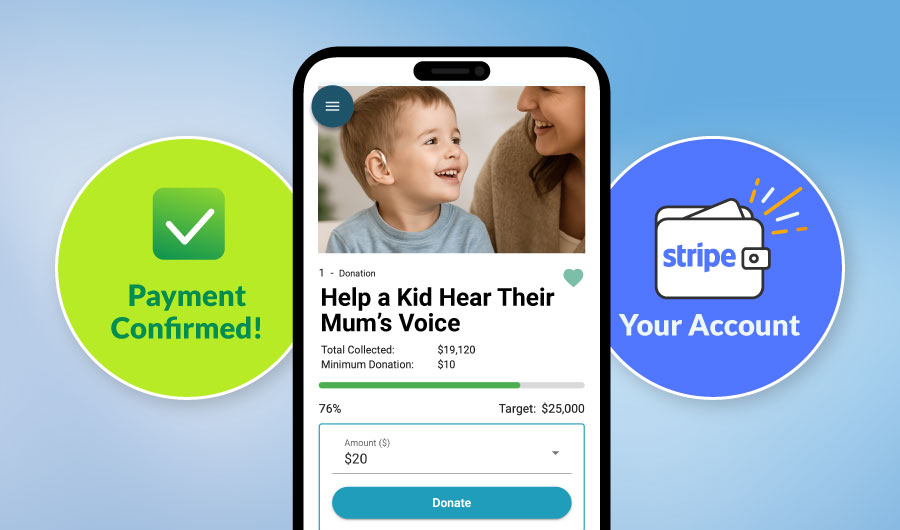
Choosing a Fundraising Platform in the US 2026: Fees, Fund Holding, and Transparency Explained
Quick answer:
Fundraising platforms differ mainly in three ways:
1) whether they hold your funds or pay directly into your own account,
2) how their fees are structured (flat fee, percentage, subscription, or donor-tip funded),
3) and how transparently they disclose those costs to donors at checkout.
The right choice depends on your fundraising volume, cash flow needs, and how much control you want over your payment processing. It also depends on your donors' appetite for extra asks and suggested tips at checkout.
1. How do fundraising platforms process your funds?
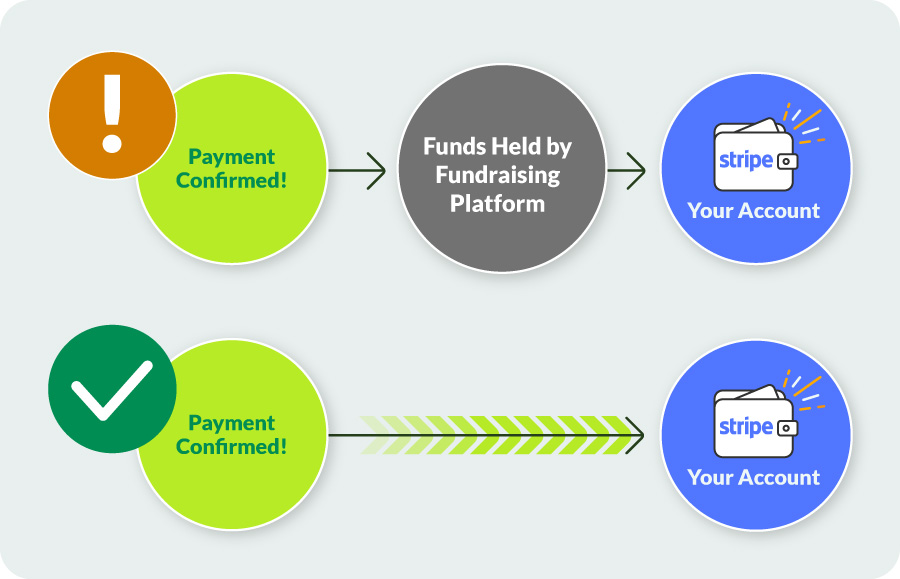
Fundraising platforms use one of two fund-holding models:
- Connected payment account (e.g., Stripe): Donations are paid directly into an account you control. Your organization retains full control and there is no third-party holding period.
- Platform-controlled wallet: The platform collects and holds donations in its own account, then transfers ("pays out") funds to you on its own schedule.
If a platform holds funds on your behalf, ask these four questions before signing up:
- How frequently are payouts made?
- Is there a minimum payout threshold?
- Who legally controls the payment account?
- What happens to your funds if the platform has financial or operational trouble?
Bottom line: a directly connected payment account gives your nonprofit more control and less counterparty risk than a platform-held wallet.
2) How do you compare fees across fundraising platforms?
To compare fees accurately, look at four cost components together, not just the headline "platform fee":
Direct answer: Two platforms with the same advertised "platform fee" can produce very different net proceeds once processing fees, subscriptions, and revenue-sharing are considered. Always calculate total cost against a realistic fundraising scenario (e.g., $50,000 raised across a hundred plus payments). Many fundraisers ask donors to cover the transaction fee on their payment. This is acceptable to most donors, and can be an effective way to offset these fees.
3) Which fundraising platforms ask organizations to cover donor transaction fees, or have confusing toggles?
This varies by platform and changes over time, so verify directly with each provider before committing. When evaluating any platform, check specifically for:
- A single, clearly optional tip at checkout (donor-friendly) vs. multiple stacked prompts (platform tip + separate "cover processing fees" ask), unless each one very clearly explains whose costs the donor is covering - the platform or the fundraiser's.
- Whether the "cover processing fees" toggle is on by default (opt-out) or off by default (opt-in) — opt-out toggles are less transparent.
- Whether the percentage requested to "cover processing" matches typical negotiated processing rates, since most established platforms do not pay full rack-rate transaction fees.
Direct answer: A transparent platform shows donors exactly how much reaches your cause versus the platform. Before committing to a platform, step through the full donation process yourself. Review exactly how tips are explained and how easy it is for donors to opt in or out. Look for platforms that make their pricing structure, fund allocation, and tipping model transparent and easy to understand. Transparency protects donor trust and protects your reputation.
4) What is the difference between free (tip-based) fundraising platforms and paid platforms?
- Free/tip-based platforms: No fee to the organizer; operations are funded by voluntary donor tips at checkout. Cost-effective to start, but donor experience depends heavily on how tipping is presented.and explained. Are donors made aware before checkout that they will be asked for a tip?
- Paid/subscription platforms: Fixed or tiered fees charged directly to the organization, charged instead of the platform asking for a tip.
- Percentage-based platforms: A fee is deducted from each donation or ticket sale.
Direct answer: There is no universally "cheapest" model. The best option depends on the amount you expect to raise, the average transaction amount and the type of fundraising you are planning. An auction item winner who has also paid for a ticket to a Gala event, may not be the ideal candidate to ask for a fundraising platform tip. By contrast, a supporter participating in an online raffle may be very amenable to tipping the platform. The best option also depends how much cost predictability you need.
5) What are the limitations of free fundraising platforms?
Common limitations to watch for as your organization scales:
- Feature gating: Advanced tools (custom branding, integrations, table planning, auctions) may require a paid upgrade.
- Cost creep: Subscription tiers can rise as you add events, users, or donor records.
- Tip reliance: Revenue to the platform depends on donor generosity, which can affect how aggressively tipping is presented.
Direct answer: "Free" typically means free at a starting tier — ask what triggers additional charges before you scale up.

6) How do you evaluate payment processing fee transparency?
Ask each platform directly:
- Are processing fees passed through at the platform's actual negotiated rate, or bundled into a broader fee structure?
- Is the donor asked to "cover" a fee in a way that is clearly optional and clearly explained?
- Does the requested "coverage" percentage reasonably match standard processing rates, rather than exceeding them?
Direct answer: Fee transparency isn't about whether donors are asked to help cover costs (this is standard) — it's about whether the ask is clearly disclosed, clearly optional, and reasonably priced.
7) What support should nonprofits expect from a fundraising platform?
Confirm before committing:
- Which channels are available: phone, email, live chat, or self-serve help center only
- Hours of coverage, especially during live events
- Whether live-event support is included or billed separately
Direct answer: For time-sensitive events (galas, auctions, giving days), platforms offering only chatbot or FAQ support carry higher operational risk than those with live human support during your event window.
7-Point Checklist: Questions to Ask Any Fundraising Platform
- Do funds go directly to my own connected payment account, or does the platform hold them?
- What is the total cost — platform fee + processing + subscriptions + revenue share?
- Is the tipping/fee-coverage prompt clear, optional, and shown once (not stacked)?
- Are processing fees passed through at real negotiated rates?
- Can I export all donor data at any time, in a usable format?
- Will costs scale predictably as I grow, or could features/fees increase unexpectedly?
- What support is available during a live campaign or event?
Summary
Fundraisers rely on platforms for an increasing variety of fundraising activities from online donations, auctions and raffles to event ticketing, table planning and paddle raises.
Beyond the feature set, choosing the right fundraising platform in 2026 comes down to four factors: fund control (direct payout vs. platform-held), true total cost (not just the headline fee), donor-facing transparency at checkout, and of course features. Nonprofits that evaluate all four, rather than comparing platform fees alone, protect both their net proceeds and donor trust.