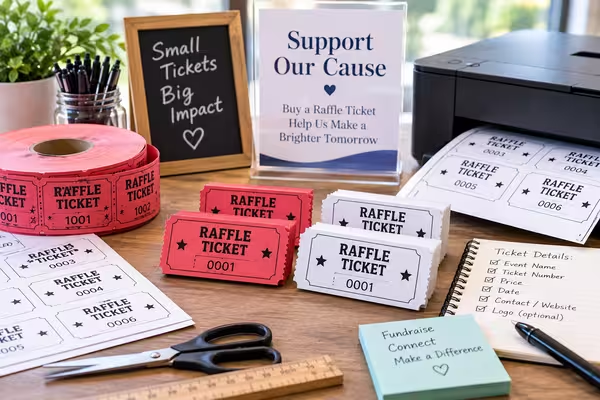
Creating raffle tickets starts with a clear ticket design, unique numbering, and the essential information participants need about your fundraiser. Whether you're printing tickets yourself or using a professional printing service, each ticket should be easy to read, easy to track, and consistent with your raffle rules. If you prefer to run your campaign digitally, GalaBid's US raffle platform can help organizations manage an online raffle and give supporters a convenient way to participate.
For physical raffle tickets, organizers also need to think about ticket size, numbering, perforation, printing quality, and how ticket sales will be recorded. A simple system established before sales begin can make it much easier to manage entries and identify the winning ticket later.
This guide explains how to create and print raffle tickets, from deciding what information to include and generating ticket numbers to choosing between DIY and professional printing.
What Information Should Be on a Raffle Ticket?
A raffle ticket should give participants enough information to understand what they're entering and allow organizers to identify valid entries.
The exact information you need can depend on your raffle and applicable requirements, but a physical raffle ticket may include:
- Organization or fundraiser name
- Unique ticket number
- Prize or raffle name
- Ticket price, where applicable
- Drawing date and time
- Website or contact information
- Relevant terms or instructions
If you're using a traditional ticket-and-stub format, both portions should display the same unique ticket number.
The participant keeps one portion while the organizer retains the corresponding stub.
Depending on how your raffle is structured, the stub might also provide space for participant details.
Avoid putting unnecessary personal information on the ticket. Only collect information your organization actually needs to administer the raffle and communicate with participants.
How to Create Raffle Tickets Step by Step
1. Determine Your Ticket Format
Start by deciding how your tickets will be distributed and managed.
Traditional physical raffle tickets often use two sections: a ticket for the participant and a detachable stub for the organizer.
Other fundraisers may use single tickets, sheets of tickets, or professionally produced ticket books.
Choose the format before designing the ticket because it affects the dimensions, layout, numbering, and printing method.
2. Decide What Information to Include
Next, determine what participants need to know.
Keep the most important information easy to find. The raffle name, ticket number, drawing information, and relevant instructions shouldn't be hidden in decorative elements.
If additional terms are too long to fit comfortably on the ticket, you can direct participants to a webpage containing the full information where appropriate.
Before printing, carefully proofread dates, times, contact information, ticket prices, and URLs. A mistake becomes much harder to correct after hundreds of tickets have been printed.
3. Create a Simple Raffle Ticket Design
A raffle ticket doesn't need an elaborate design.
Prioritize readability.
Your organization's name or logo can help identify the fundraiser, but it shouldn't overpower essential information such as the ticket number.
Use readable fonts and enough contrast between the text and background. Leave sufficient space around important information rather than trying to fill every part of the ticket.
If the ticket includes a detachable stub, clearly separate the participant's section from the organizer's section.
4. Create a Numbering System
Every physical raffle ticket should have a unique identifier if ticket numbers are being used to identify entries.
A straightforward sequential system might look like:
0001, 0002, 0003, 0004, 0005
If you're printing multiple batches, keep track of which numbers belong to each batch.
For example, you don't want two separately printed sets to accidentally contain ticket number 0125.
Maintain a record of the ticket ranges you produce and distribute. This can make reconciliation easier when tickets are sold by multiple volunteers or at different locations.
5. Use a Raffle Ticket Template or Generator
A template can save time because you don't have to create the layout from scratch.
When evaluating a raffle ticket template, check whether you can customize:
- Organization name
- Ticket numbers
- Prize information
- Drawing details
- Ticket price
- Branding
- Terms or instructions
- Contact information
A raffle ticket generator may also help automate sequential numbering instead of requiring organizers to enter every number manually.
Before producing the full batch, generate a small test and check that the numbering sequence works correctly.
6. Choose DIY or Professional Printing
Once your ticket design is ready, decide how you'll print it.
DIY Raffle Ticket Printing
Printing tickets yourself can be practical for organizations that already have suitable equipment and are producing a manageable quantity.
DIY printing gives you control over last-minute changes and lets you print additional batches when necessary.
However, you need to consider paper quality, ink or toner, cutting, numbering, and perforation.
Print a test sheet first. Check that text is readable, ticket numbers are correct, margins aren't being cut off, and both sides align properly if you're using double-sided printing.
Professional Raffle Ticket Printing
A professional printer may be useful when you need a larger quantity or features that are difficult to produce in-house.
Depending on the printer, options may include sequential numbering, perforated stubs, different paper stocks, custom sizes, and finishing.
Before approving an order, request or carefully review the proof.
Pay particular attention to the ticket numbers, drawing date, ticket price, website, contact details, and any raffle-specific terms.
7. Choose the Right Paper
If you're printing tickets yourself, select paper that works reliably with your printer and is practical for handling.
Very thin paper may tear easily, while paper that's too thick may not feed properly through a home or office printer.
If tickets need to be written on, make sure pens can be used on the surface without excessive smudging.
The best choice depends on your printer, ticket format, and how the tickets will be distributed.
8. Cut and Perforate Your Tickets
If your tickets are printed several to a page, they need to be separated consistently.
A paper cutter can provide more uniform edges than cutting large quantities individually with scissors.
For tickets with detachable stubs, perforation can make separation easier.
Test the perforation before producing the entire batch. It should be easy enough to tear without accidentally separating during normal handling.
9. Check Your Tickets Before Distribution
Don't start selling or distributing tickets immediately after printing.
Perform a final quality check.
Look for missing or duplicated ticket numbers, incorrect dates, formatting problems, damaged tickets, unclear text, or mistakes in the raffle information.
For a numbered raffle, verify that the sequence matches your records.
A small amount of quality control before distribution can prevent significant confusion when the drawing takes place.
10. Keep Track of Printed and Distributed Tickets
Ticket management shouldn't end when printing is finished.
Record the number ranges assigned to volunteers, staff members, event locations, or other distribution points.
For example, if one volunteer receives tickets 0101 through 0150, record that range.
When tickets or stubs are returned, your organization can reconcile them against the original distribution record.
The exact tracking process will depend on the size and structure of your fundraiser, but it should be simple enough that your team will consistently use it.
Should You Print Raffle Tickets or Run the Raffle Online?
Physical tickets can work well for in-person fundraising events, community activities, and campaigns where supporters expect a traditional ticket.
Online raffles offer a different experience. Instead of printing and manually distributing physical tickets, supporters can participate through an online campaign.
The right approach depends on your audience, fundraising format, and applicable raffle requirements.
Some organizations may also use digital fundraising tools alongside in-person promotion, giving supporters another way to learn about the campaign.
Common Raffle Ticket Printing Mistakes
One of the most important mistakes to avoid is printing the full batch before checking a proof. A small error in the date, numbering, or contact information can be repeated across every ticket.
Duplicate numbering can also cause problems. If ticket numbers identify entries, every valid number needs to be distinguishable.
Other issues include text that's too small to read, poor-quality cutting, missing raffle information, inconsistent ticket sizes, and failing to maintain records of distributed tickets.
Keep the design simple and test the complete process before producing your final batch.
Raffle Ticket Templates vs Raffle Ticket Generators
Although the terms are sometimes used together, they can serve different purposes.
A raffle ticket template gives you a predefined design or layout that you can customize.
A raffle ticket generator may automate parts of the creation process, such as generating sequential numbers or producing multiple tickets from a single design.
If your main challenge is design, a customizable template may be enough. If you need to create a large sequence of uniquely numbered tickets, a generator or another tool capable of variable numbering may be more useful.
The important thing is to verify the final output before printing.
Running a Raffle in the United States
Organizations should check the requirements that apply before running a raffle.
Raffle laws and requirements can vary by state and, in some cases, by local jurisdiction. Requirements may also differ depending on the type of organization conducting the raffle.
Don't assume that a raffle format permitted in one state automatically applies everywhere in the US.
Your organization should review the applicable rules for its location and fundraising activity before selling or distributing raffle entries.
Take Your Raffle Online With GalaBid
If printing, numbering, distributing, and tracking physical tickets isn't the right fit for your fundraiser, you can consider running your campaign online.
With GalaBid, organizations can create an online raffle, showcase prizes, and give supporters a convenient way to participate digitally.
Whether you're planning a nonprofit fundraiser, school campaign, community event, or other fundraising activity, your raffle should have clear prize information, closing details, participation instructions, and applicable terms.
Explore GalaBid's US raffle platform and start planning your online fundraiser.
Frequently Asked Questions
How do I create raffle tickets?
Start by choosing a ticket format and adding the essential raffle information. Create a clear design, assign unique ticket numbers, proofread everything, and then print a test batch before producing the final quantity.
What information should I put on a raffle ticket?
Depending on the raffle, information may include the organization's name, unique ticket number, prize or campaign name, ticket price, drawing date and time, contact information, and relevant instructions or terms.
How do you number raffle tickets?
Sequential numbering is a straightforward option. For example, tickets could run from 0001 to 0500. Keep records of each range printed and distributed and check for duplicate or missing numbers.
Can I print my own raffle tickets?
Yes, provided your printing setup can produce tickets that meet your needs and applicable requirements. Test your printer, paper, layout, numbering, and cutting process before producing the entire batch.
What is a raffle ticket generator?
A raffle ticket generator is a tool that can help create raffle tickets and may automate tasks such as sequential numbering. Features vary by tool, so check whether it supports the design and printing requirements you need.
Should I use DIY or professional raffle ticket printing?
DIY printing may work for smaller quantities or organizations with suitable equipment. Professional printing may be useful when you need larger quantities, sequential numbering, perforation, or specialized finishing.
Can US nonprofits run raffles?
Raffle rules vary across the United States. Nonprofits should check applicable state and local requirements before running or promoting a raffle.
Create Your Online Raffle With GalaBid
Want an easier way to manage your fundraiser without printing and tracking physical tickets? GalaBid's US raffle platform lets you create an online raffle, showcase your prizes, and give supporters a convenient way to participate from their phones or other devices.
Start your US raffle with GalaBid today and bring your fundraising campaign online.
More advice articles about Raffle
About GalaBid
Ideal for donations. Perfect for Raffles. Awesome for Live and Silent Auctions! GalaBid’s online fundraising platform is designed for fundraisers of all types and sizes. For over 10 years we’ve been helping non-profits, charities, community clubs, churches, schools, and individuals to raise more and make a difference.