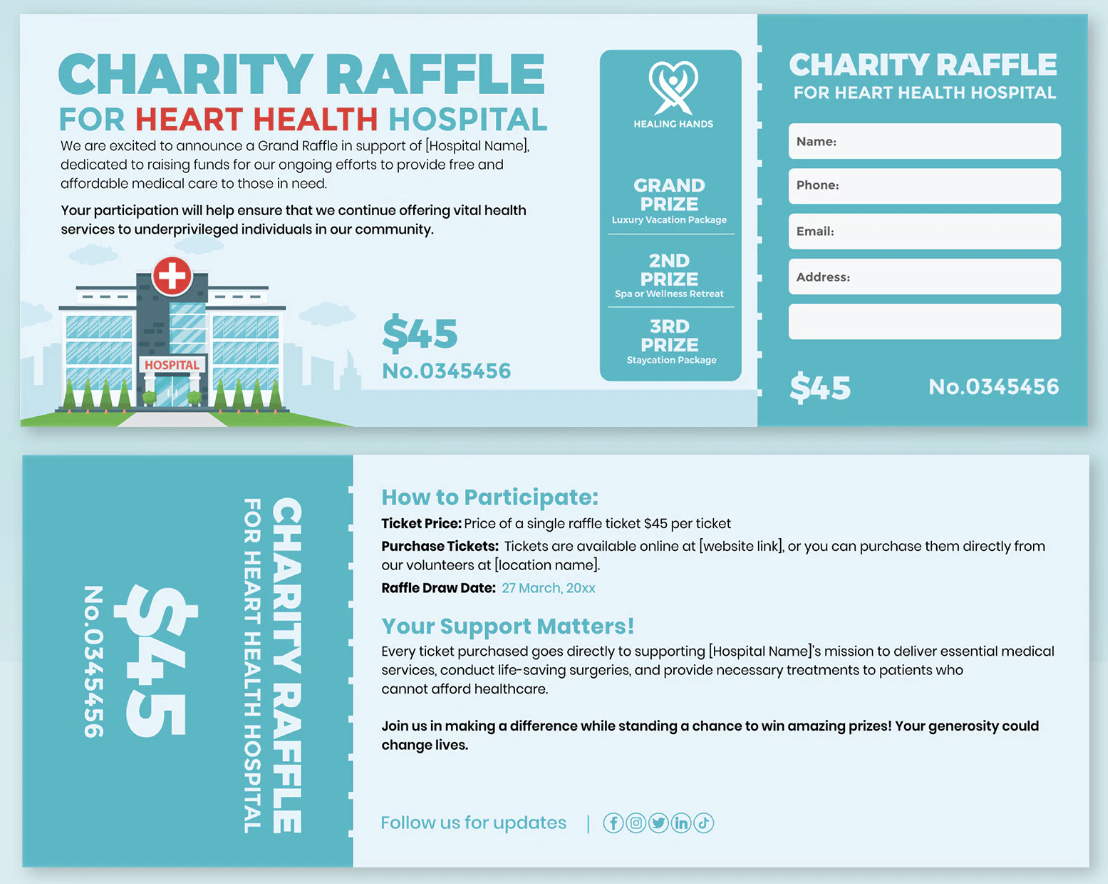
For most raffles, the raffle ticket is the first thing potential purchasers see before deciding whether to buy in. A clean, well-organized approach to raffle ticket design builds trust, makes the offer easy to understand, and gives supporters the confidence to get involved.
The good news is that good raffle ticket design isn't about graphic design expertise. It's about clarity, consistency, and making sure the right information is easy to find. This guide walks through what a good raffle ticket needs, the layout choices that improve readability, and the mistakes that can cost you ticket sales. Once your tickets are ready, pairing them with a solid plan to promote your raffle on social media will help turn good design into actual sales.
What Makes a Good Raffle Ticket?
A good raffle ticket does a simple job well: it tells the buyer exactly what they're getting, who's running the raffle, and how they'll find out if they've won. A few qualities separate a ticket that builds confidence from one that creates doubt.
- Clear layout - Information should be grouped logically, organization details together, prize details together, ticket number and price easy to spot at a glance.
- Professional appearance - Consistent margins, aligned text, and a tidy structure signal that the raffle is being run properly, which matters more to supporters than most organizers realize.
- Easy-to-read text - Fonts should be legible at a glance, not decorative scripts that slow the reader down.
- Simple design - A ticket isn't the place to showcase every graphic element you have, restraint reads as professionalism.
- Consistent branding - Logo, colors, and fonts should match the rest of your raffle materials, from social posts to your campaign page.
- Important information displayed clearly - The ticket number, price, and draw date shouldn't require a buyer to hunt for them.
None of this requires design theory or specialist software, just a clear sense of priority for what the buyer needs to see first.
Essential Information Every Raffle Ticket Should Include
Every raffle ticket, whether printed or digital, should communicate the basics without the buyer needing to ask a volunteer or dig through an event program. Some details are non-negotiable; others add polish but aren't strictly required.
The required column is what protects the buyer and the organization — without it, a ticket is difficult to verify and doesn't meet the basic expectations most raffle rules call for. The optional column adds convenience and professionalism, but a raffle can still run smoothly without it. If you're setting up a raffle for the first time and want a full rundown of what needs to be in place beyond the ticket itself, our guide to planning an online fundraising raffle covers the wider planning checklist.
Simple Design Tips That Improve Readability
Readable doesn't mean elaborate. A handful of practical habits make a ticket easier to scan, whether someone is looking at it on a phone screen or holding a printed strip.
- Use large headings
The organization name and prize should be the first thing a buyer's eye lands on. - Keep fonts easy to read
Stick to one or two simple fonts. A decorative font might look nice for one line, but never for a ticket number or a price. - Use consistent spacing
Equal spacing between sections helps the eye move through the ticket in order, rather than jumping around. - Highlight important details
Bold or slightly larger text for the price, draw date, and ticket number stops those details from getting lost. - Avoid clutter
If a design element doesn't help the buyer understand the raffle, it's probably competing with something that does. - Leave enough white space
Crowded tickets feel rushed and cheap; breathing room feels considered and professional.
These are usability choices, not typography theory, the goal is simply for a buyer to understand what they've bought in the two or three seconds they'll actually spend looking at it.
Using Your Organization's Branding
Consistent branding across your raffle materials does more than look tidy, it reassures supporters that they're buying from a real, organized cause rather than something thrown together at the last minute.
- Logo placement. Put your logo somewhere consistent,, top corner or centered header, on every ticket and every other raffle material.
- Brand colours. Reuse the same one or two colours from your website or campaign page rather than introducing new ones just for the ticket.
- Consistent fonts. The same fonts used on your event flyers and campaign page should appear on the ticket.
- Matching event materials. Tickets, signage, social posts, and your online raffle page should all look like they belong to the same event.
- Professional appearance. None of this needs to be expensive, it needs to be consistent.
Supporters who see the same look and feel across every touchpoint are more likely to trust that their money is going somewhere organized and accountable, which directly supports ticket sales.
Should You Add Photos or Graphics?
Visuals can help a ticket sell the prize, but they can just as easily crowd out the information a buyer actually needs. It's worth being selective about which visuals earn a place on the ticket itself.
- Prize photos work well when there's a single, clear headline prize. A photo of the item builds excitement fast. If you're still finalizing what's up for grabs, our roundup of raffle basket prize ideas may help you land on something with strong ticket-selling appeal.
- Event logos reinforce branding without adding visual noise, since they're usually small and simple.
- Simple icons (a ticket icon, a calendar icon next to the draw date) can support readability rather than distract from it.
- Background images are the riskiest choice, they often reduce contrast and make text harder to read, especially on a printed ticket.
- Decorative elements like borders or patterns are fine in moderation, but should never sit behind or overlap with text.
A useful rule of thumb: if a visual makes any of the required information harder to read, it needs to be resized, repositioned, or removed — no exceptions for how good it looks on its own.
Print and Digital Ticket Considerations
Most raffles today run some combination of printed and digital tickets, and each format has its own design needs.
Printed tickets need to hold up in someone's pocket or bag, clear contrast, a font size that's legible without reading glasses, and a numbering system that's simple to track manually if needed.
Digital tickets need to work first on a phone screen, since that's where the vast majority of supporters will view them. This means larger tap targets if there's any interactivity, and text sized for a small screen rather than a desktop monitor.
QR codes are one of the most useful additions to a modern raffle ticket, linking straight to your raffle page, terms and conditions, or a way to buy additional tickets. If you're including one, test it on multiple phones before printing or sending anything at scale — a code that's too small, too close to an edge, or printed with low contrast can fail to scan. Our dedicated guide on digital raffle ticket best practices covers the considerations in more depth.
Ticket numbering should be simple, sequential, and easy to verify against your records, whether tickets are generated automatically through an online raffle platform or issued manually.
Common Raffle Ticket Design Mistakes
A handful of avoidable mistakes show up again and again on raffle tickets, and each one has a straightforward fix.
- Too much text
Fix: keep wording to the essentials — a full description of the prize can live on your raffle page, not the ticket.
- Small fonts
Fix: test the ticket at actual size, printed or on a phone screen, before finalizing it.
- Missing important information
Fix: check the ticket against the required list above before it goes to print or gets sent out.
- Poor colour contrast
Fix: dark text on a light background (or vice versa) is safest — avoid pairing similar tones.
- Low-quality images
Fix: use a higher-resolution version of any photo, or leave the image out rather than use a blurry one.
- Weak calls to action
Fix: make sure the ticket (or the page it links to) clearly tells the buyer what to do next, whether that's visiting a link, buying more tickets, or checking results.
Raffle Ticket Design Checklist
Before yourprinted or digital tickets go out, run through this quick checklist:
FAQ
What information should every raffle ticket include?
As a minimum, your organization name, event name, ticket number, ticket price, draw date, and a prize summary. Contact details and a website or QR code are strongly recommended but not strictly required.
What size should raffle tickets be?
There's no fixed standard, but most printed raffle tickets are designed to be easy to hold, tear along a perforation, and read at arm's length and small enough to fit several to a printed sheet, large enough that the price and ticket number aren't squeezed.
Should raffle tickets include QR codes?
In most cases, yes. A QR code linking to your raffle page, terms, or ticket purchase link makes it easy for supporters to buy more tickets, check the draw date, or verify the raffle's legitimacy — provided it's tested and sized to scan reliably.
Can I design raffle tickets using Canva?
Yes, Canva and similar tools are commonly used for raffle ticket design, particularly for printed tickets. For digital ticketing, many organizations instead use an online raffle platform that generates numbered digital tickets automatically.
What is the best font for raffle tickets?
A simple, legible sans-serif font is usually the safest choice for body text and numbers. Decorative fonts can work for a heading or organization name, but shouldn't be used for the ticket number, price, or draw date.
Should raffle tickets be printed or digital?
Many raffles now use a mix of both. Digital tickets are faster to distribute, easier to track, and better suited to online sales, while printed tickets still suit in-person events and supporters who prefer a physical ticket in hand.
Create a Professional Raffle with GalaBid
Well-designed raffle tickets make participation simple and create a professional first impression. GalaBid helps nonprofits create digital raffle pages, manage ticket sales, and run successful fundraising events from one easy to use platform.
More advice articles about Raffle
About GalaBid
Ideal for donations. Perfect for Raffles. Awesome for Live and Silent Auctions! GalaBid’s online fundraising platform is designed for fundraisers of all types and sizes. For over 10 years we’ve been helping non-profits, charities, community clubs, churches, schools, and individuals to raise more and make a difference.