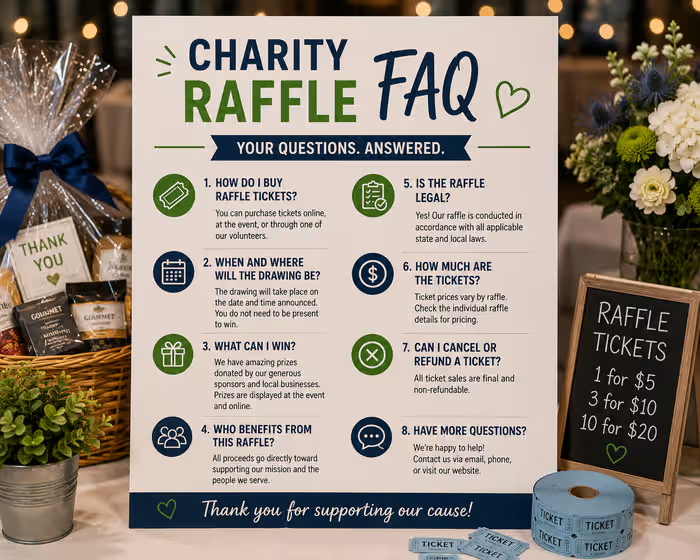
Organizing a charity raffle often raises similar questions, especially for first-time organizers. From planning fundamentals to event day logistics, nonprofits frequently seek guidance on the same topics. This comprehensive FAQ hub provides quick, practical answers to help you confidently plan and execute a successful charity raffle fundraiser.
Whether you're launching your first raffle or refining an annual tradition, this guide covers the most common questions across all stages of the process. For deeper guidance on specific topics, detailed resources are available throughout your organization's fundraising library.
Getting Started
What is a charity raffle?
A charity raffle is a fundraising method where supporters purchase numbered tickets for a chance to win donated or purchased prizes. Tickets are typically priced affordably (ranging from $5 to $100+), and winners are selected randomly via drawing. All proceeds benefit the nonprofit organization.
Raffles appeal to supporters because they offer entertainment value and the chance to win valuable prizes. For nonprofits, raffles generate revenue while engaging donors and building community involvement. They're effective for annual events, capital campaigns, and emergency fundraising.
How does a charity raffle work?
The basic raffle process involves five steps:
- Planning - Define goals, budget, timeline, and target audience
- Promotion - Announce the raffle and build awareness through various channels
- Sales - Sell tickets through online platforms, in-person events, or direct outreach
- Drawing - Select winners randomly at a designated event or time
- Follow-up - Thank participants and announce results
The process typically spans 4-12 weeks depending on your nonprofit's needs and goals. Most raffles run longer when building excitement and awareness. Simpler raffles can be organized in 2-4 weeks.
How long does it take to plan a raffle?
Planning timelines vary based on raffle size and complexity. A small, local raffle targeting existing supporters might take 2-3 weeks of active planning. A larger, community-wide raffle with significant promotion may require 8-12 weeks.
Key factors affecting timeline include prize sourcing, ticket inventory, marketing campaign scope, volunteer coordination, and event logistics. Starting with a realistic timeline prevents rushed execution and allows for quality promotion.
What is the easiest way to organize a raffle?
The simplest approach uses proven fundamentals:
- Keep the raffle focused (one event, one goal, clear audience)
- Source prizes efficiently (seek donations from local businesses)
- Use existing communication channels (email lists, social media, in-person meetings)
- Leverage volunteer help (divide tasks among committed supporters)
- Choose a software platform that handles ticket sales and winner selection
Starting small, focusing on execution excellence, and building from a proven model ensures success and reduces organizational burden.
Ticket Sales
How much should raffle tickets cost?
Ticket pricing depends on several factors:
- Prize value - Higher-value prizes justify higher ticket prices
- Audience demographics - Determine what your supporters can afford
- Sales quantity - Target volume affects individual ticket pricing
- Event type - Gala events support higher pricing than community fundraisers
Common pricing strategies include:
- Standard raffles: $5-$25 per ticket
- Premium raffles: $25-$100+ per ticket
- Tiered pricing: Offer discounts for bulk purchases ("5 tickets for $20")
Testing different price points and monitoring sales velocity helps optimize revenue without deterring participation.
Can I sell tickets online?
Yes, online ticket sales are increasingly standard for modern fundraising. Digital platforms allow supporters to purchase tickets from anywhere, anytime, expanding your reach beyond in-person events.
Online ticket sales offer advantages including reduced administrative burden, real-time sales tracking, payment processing automation, and accessible record-keeping. Many nonprofits combine online and in-person sales channels to maximize participation.
Payment methods should include credit cards, debit cards, and potentially mobile payment options to accommodate supporter preferences.
Should I use QR codes?
QR codes bridge physical and digital fundraising experiences effectively. Printed materials, promotional posters, event signage, and email campaigns can include QR codes linking directly to online ticket purchases.
Benefits of QR codes include:
- Immediate purchase access without typing URLs
- Trackable click-through data for campaign analysis
- Seamless integration with online platforms
- Professional, modern appearance
- Cost-effective implementation
QR codes work particularly well for hybrid events combining in-person and digital participation.
Can people buy multiple tickets?
Absolutely. Allowing multiple ticket purchases increases revenue and gives enthusiastic supporters more chances to win. Many successful raffles encourage bulk purchases through tiered pricing.
Strategies include:
- Remove purchase limits for online sales
- Offer bundle discounts (5 tickets for $20, 10 tickets for $35)
- Create incentive tiers (buy 10+ tickets and receive entry into exclusive drawings)
- Allow team purchases where groups pool resources
Tracking individual purchaser data helps identify your most engaged supporters for future cultivation.
Raffle Prizes
What prizes attract the most participants?
Attractive prizes share common characteristics:
- Relevant to your audience - Match supporter interests and demographics
- Perceived high value - Gifts worth notably more than ticket price
- Experiential appeal - Unique experiences attract more interest than generic items
- Diverse range - Multiple prizes appeal to varied interests
- Clear descriptions - Compelling, detailed prize descriptions drive ticket sales
Prize categories that consistently generate interest include:
- Dining and entertainment experiences
- Travel packages and getaways
- Wellness services and spa treatments
- Sports equipment and recreation passes
- Technology and electronics
- Gift baskets and specialty collections
- Local business services and products
Understanding your specific audience demographics ensures prize selection resonates with your supporters' preferences and lifestyles.
Should prizes be donated?
Both donated and purchased prizes are effective. Many successful raffles use combination approaches:
Donated prizes offer advantages including:
- Reduced costs (higher profit margin)
- Community business relationships strengthened
- Tax deductibility for donors
- Authentic "local business support" narrative
Purchased prizes offer advantages including:
- Guaranteed availability and quality
- Specific value and appeal targeting
- Consistent presentation and delivery
- Controlled pricing and positioning
Most nonprofits pursue donated prizes actively while strategically purchasing key premium items that anchor the raffle offering.
How many prizes should I offer?
Prize quantity depends on:
- Ticket sales volume - General guideline: 1 prize per 15-25 tickets sold
- Budget constraints - Total prize value typically represents 30-50% of revenue goal
- Audience size - Larger audiences support more prizes
- Prize value distribution - Mix of high-value anchor prizes with smaller items
A typical raffle structure includes:
- 1-2 premium grand prizes ($500-$2,000+ value)
- 3-5 mid-tier prizes ($100-$500 value)
- 8-15 smaller prizes ($25-$100 value)
This range accommodates most supporter participation levels while maintaining appeal across demographics.
How should prizes be displayed?
Professional prize presentation significantly impacts ticket sales. Display strategies depend on format:
In-person events:
- Feature grand prizes prominently at event entrance or center
- Arrange prizes by category or theme
- Use attractive signage with clear descriptions
- Include pricing and value information
- Maintain organized, clutter-free presentation
Digital/online raffles:
- Photograph prizes professionally with clear, well-lit images
- Write compelling, detailed descriptions
- Highlight prize value and exclusivity
- Organize categories logically for browsing
- Include donor information where appropriate
Quality presentation directly correlates with higher ticket sales and stronger supporter engagement.
Marketing and Promotion
When should I start promoting?
Effective promotion timelines vary by raffle type:
- Community-wide raffles: Begin 8-10 weeks before drawing
- Supporter raffles: Start 4-6 weeks in advance
- Quick fundraisers: Promote 2-3 weeks minimum
- Holiday raffles: Begin 6-8 weeks prior
Early promotion builds awareness gradually, allowing word-of-mouth marketing to develop organically. Extended timelines also accommodate supporters' purchase planning and budget considerations.
Promote in waves rather than as single announcements to maintain visibility and urgency throughout the campaign.
What social media platforms work best?
Platform effectiveness depends on your supporter demographics:
Facebook - Most effective for nonprofit audiences; reach existing supporters; target age demographics; build community conversation
Instagram - Excellent for visual prize promotion; showcase donated items; behind-the-scenes event content; younger demographic reach
Email - Highest conversion rates; reach confirmed supporters directly; segment audiences by engagement level; track click-through data
LinkedIn - Effective for corporate donor outreach; B2B partnerships; professional community engagement
TikTok - Emerging channel for younger audiences; viral potential; creative content opportunities; test before major investment
Most successful nonprofits use multi-channel approaches, tailoring content to each platform's unique audience and format requirements.
Should I email previous supporters?
Yes, previous supporters represent your highest-conversion audience. Email campaigns targeting past donors should:
- Emphasize raffle specifics and prize value
- Include clear calls-to-action with direct purchase links
- Segment lists by donor level (customize messaging for major donors)
- Send multiple reminders (initial announcement, midpoint reminder, final week urgency)
- Include social sharing options
Email generates significantly higher ticket sales than social media for established nonprofits, making targeted email campaigns essential.
How do I attract more participants?
Participation-boosting strategies include:
- Compelling prizes - Select items your audience genuinely wants
- Multiple channels - Reach supporters through email, social, in-person, partnerships
- Urgency messaging - Emphasize limited time and specific drawing date
- Community partnership - Cross-promote with aligned organizations
- Early-bird incentives - Offer bonuses for early purchases
- Team participation - Encourage group purchases and shared participation
- Celebrity involvement - Leverage board member or local figure endorsement
Combination approaches consistently outperform single-channel promotions. Test different messaging and channels to identify highest-performing tactics for your specific audience.
Event Day
How is the winner selected?
Winner selection methods must ensure fairness and transparency:
Manual drawing:
- Place all ticket stubs in container
- Publicly draw winners one at a time
- Verify ticket numbers and winner information
- Announce immediately to audience
Digital drawing:
- Use software to randomly generate ticket numbers
- Broadcast process for transparency
- Verify winner contact information
- Document process for records
Hybrid approach:
- Sell physical and digital tickets
- Use software for fair randomization
- Manual drawing for symbolic presentation
- Clear documentation of both processes
Whatever method you choose, emphasize transparency and fairness. Document the process for organizational records and potential audit verification.
How should winners be announced?
Winner announcements should be:
- Public and celebratory - Share results across channels and with community
- Timely - Announce promptly after drawing
- Personalized - Contact winners directly before public announcement
- Documented - Photograph, video, or record announcement for marketing
- Transparent - Confirm winner information publicly
Announcement channels include email, social media, in-person celebration events, local media, and organizational newsletters. Multi-channel announcements amplify impact and celebrate supporter excitement.
What happens if someone cannot attend?
Winner absence protocols should include:
- Alternative contact method - Phone, video conference, or mail option
- Prize delivery options - Arrange logistics for unable-to-attend winners
- Rescheduled pickup - Offer convenient alternative timeframes
- Flexible formats - Accommodate different winner circumstances
Clearly communicate these options in raffle terms and conditions. Most supporters appreciate flexibility and alternative arrangements rather than forfeiting prizes due to scheduling conflicts.
How do I manage volunteers?
Effective volunteer coordination includes:
- Clear role definition - Specify responsibilities and timeframes
- Training - Provide orientation on raffle process and expectations
- Communication - Regular updates and reminders
- Recognition - Thank volunteers publicly and personally
- Flexibility - Accommodate volunteer availability constraints
Designate a volunteer coordinator to manage assignments, troubleshoot issues, and ensure smooth event execution. Organized volunteer programs improve operational success and volunteer satisfaction.
After the Raffle
How do I thank supporters?
Comprehensive thank-you approaches include:
- Personal email - Personalized message to all ticket purchasers
- Public announcement - Share results and thank-yous through newsletters and social media
- Prize donor recognition - Acknowledge businesses and individuals who donated items
- Volunteer appreciation - Celebrate volunteer contributions in writing and at events
- Impact communication - Share how raffle funds directly benefit your mission
Specific, personal thank-yous generate stronger donor relationships than generic messages. Acknowledge specific contributions and personalize communications where possible.
Should I share fundraising results?
Yes, transparency builds trust and demonstrates impact:
- Share gross revenue - Total raised from ticket sales
- Explain expenses - Costs of prizes, software, and administration
- Highlight net revenue - Funds directly benefiting your mission
- Describe impact - How raffle funds specifically advance your organization's work
- Celebrate success - Acknowledge record-breaking results if applicable
Transparent reporting positions your nonprofit professionally and encourages repeat participation. Supporters appreciate knowing how their contributions drive mission impact.
How can I encourage people to return next year?
Retention strategies include:
- Consistent scheduling - Host raffles at predictable times (same month, day type)
- Improved prizes - Gather feedback and upgrade offerings each year
- Recognition programs - Thank repeat supporters; offer loyalty incentives
- Expanded access - Increase online options; add new participation channels
- Community building - Create social aspects that supporters enjoy
- Impact storytelling - Share compelling stories about raffle-funded programs
Raffles benefit from annual traditions where supporters anticipate and plan participation. Consistent, excellent execution builds momentum and participant loyalty.
What should I review after the event?
Post-raffle evaluation should examine:
Financial performance:
- Total revenue vs. goals
- Ticket sales by channel
- Average ticket price
- Prize value vs. revenue ratio
Operational efficiency:
- Timeline adherence
- Volunteer satisfaction and turnout
- Software platform performance
- Communication effectiveness
- Unexpected challenges and solutions
Marketing effectiveness:
- Promotion channel performance
- Supporter feedback and sentiment
- Participation rates by demographic
- Most effective messaging approaches
Strategic insights:
- Prize popularity and preferences
- Supporter engagement patterns
- Channel expansion opportunities
- Year-over-year trends and improvements
Comprehensive post-event analysis informs strategy refinement and ensures continuous improvement for future fundraisers.
Technology Questions
Do I need raffle software?
Software necessity depends on your raffle scope:
Software recommended for:
- Large raffle programs (200+ tickets)
- Online ticket sales
- Complex prize management
- Donor tracking requirements
- Multi-event management
- Volunteer coordination
Manual processes acceptable for:
- Small raffles (under 100 tickets)
- Single annual events
- Local, in-person only
- Simple prize structures
Software platforms streamline operations, reduce manual errors, and provide valuable data tracking. For nonprofits planning regular raffles, investment in quality software pays dividends through improved efficiency and donor experience.
Can I sell digital tickets?
Yes, digital ticket sales are standard practice. Online platforms allow supporters to purchase instantly without geographic limitations or time constraints.
Digital ticket advantages include:
- Expanded geographic reach
- 24/7 sales availability
- Instant payment processing
- Automated winner selection
- Real-time sales tracking
- Reduced administrative work
Most successful modern raffles include digital ticket sales as primary channels, supplemented by in-person sales for community engagement.
Can supporters join remotely?
Hybrid raffles accommodate both in-person and remote participation:
- Remote ticket sales - Online purchase options
- Virtual events - Live-streamed drawings and announcements
- Remote prize fulfillment - Mail or local delivery options
- Digital communication - Email updates and notifications
- Online community - Social media engagement for distributed audiences
Remote participation significantly expands audience reach beyond geographic limitations while maintaining in-person community experience for local supporters.
What payment methods should I accept?
Comprehensive payment options maximize accessibility:
- Credit cards - Visa, Mastercard, American Express
- Debit cards - Direct bank account access
- Digital wallets - PayPal, Apple Pay, Google Pay
- Bank transfers - ACH payments for major donors
- Cash - In-person transactions at events
Multi-option payment acceptance removes barriers to participation and accommodates diverse supporter preferences. Modern payment processors handle multiple methods seamlessly.
Frequently Asked Legal Questions
Do raffle rules vary by location?
Yes, raffle regulations differ significantly by state, province, and local jurisdiction. Some areas require specific licenses, registration, or approval. Others prohibit raffles entirely or restrict participation methods.
Legal requirements commonly address:
- Licensing and registration requirements
- Prize value limitations
- Eligible participant demographics
- Ticket pricing and sales methods
- Winner selection procedures
- Financial reporting requirements
Thoroughly research your specific jurisdiction before launching any raffle program.
Should I check local regulations?
Absolutely. Legal compliance is essential for nonprofit protection and operational legitimacy. Before any raffle:
- Contact your state attorney general's office
- Review state gaming and lottery regulations
- Check local government requirements
- Consult your nonprofit's legal counsel
- Document compliance efforts
- Maintain required registrations and licenses
Regulatory compliance prevents legal issues and demonstrates organizational professionalism.
Why should I publish raffle rules?
Clear, published raffle rules provide:
- Transparency - Participants understand terms and conditions
- Legal protection - Documented rules defend your organization
- Fairness assurance - Clear rules prevent disputes and misunderstandings
- Professional credibility - Demonstrates legitimate, well-managed fundraising
- Regulatory compliance - Required documentation for jurisdictions with specific regulations
Raffle rules should clearly address eligibility, ticket pricing, drawing procedures, prize fulfillment, winner announcement timing, and organizational liability disclaimers.
Where can I find official guidance?
Authoritative raffle guidance sources include:
- State attorney general - Official raffle regulations and licensing
- State gaming commission - Specific rules and compliance procedures
- Local government - City or county clerk offices for jurisdiction-specific requirements
- Nonprofit associations - State nonprofit councils and industry organizations
- Nonprofit legal counsel - Professional guidance specific to your organization's situation
Starting with your state attorney general's office provides comprehensive information about applicable regulations.
FAQ: Highest-Value Questions
Q: How much should we budget for a raffle?
A: Budget should allocate approximately 30-50% of projected revenue to prizes, with remaining funds supporting promotion, software, and operational costs. Adjust based on your specific circumstances, goals, and available volunteer resources.
Q: What makes a raffle successful?
A: Successful raffles combine compelling prizes, clear communication, efficient execution, and strong supporter relationships. Focus on promotion quality, prize appeal, and operational excellence rather than raffle size.
Q: How do we build excitement before the raffle?
A: Build excitement through regular promotional touchpoints, compelling prize reveals, countdown timers, early-bird incentives, and community partnership announcements. Multi-channel promotion sustained over weeks generates higher participation than last-minute announcements.
Q: Can we run multiple raffles per year?
A: Yes, many nonprofits run quarterly or semi-annual raffles successfully. Consistency helps supporters anticipate participation. Avoid audience fatigue by spacing raffles appropriately and rotating prize themes.
Q: Should board members buy raffle tickets?
A: Absolutely. Board member participation demonstrates commitment, supports fundraising targets, and models supporter behavior. Encourage board members to purchase multiple tickets and promote within their networks.
Q: How do we handle duplicate winners?
A: Re-draw if an ineligible person wins (such as staff member in staff-only raffle) or if legal restrictions apply. If eligible, award prizes as drawn. Clear rules prevent disputes; communicate procedures in advance.
Q: What's the best raffle format for small nonprofits?
A: Simple, focused raffles work best. Limited prize quantity (5-15 prizes), modest ticket prices ($5-$25), and targeted promotion to existing supporters generates strong results without overwhelming volunteer capacity.
Q: How do we maximize online ticket sales?
A: Maximize online sales through email promotion to existing supporters, social media campaigns targeting your audience demographics, QR code integration on physical materials, and simplified checkout processes. Test different messaging and offers to optimize conversion rates.
Q: How many times should we promote our raffle?
A: Promote through 5-7 distinct touchpoints across the campaign timeline: initial announcement, early promotion phase, midpoint reminder, final week urgency, drawing notification, results announcement, and thank-you communication. Multi-touch campaigns significantly outperform single announcements.
Q: Can we combine our raffle with other fundraising?
A: Yes, raffles integrate effectively with galas, silent auctions, peer-to-peer campaigns, and major donor events. Combination approaches typically generate more total revenue than raffles alone while providing diverse supporter engagement options.
Q: What data should we track after each raffle?
A: Track ticket sales by channel, revenue vs. goals, supporter demographics, promotional channel effectiveness, volunteer feedback, operational challenges, and timeline adherence. Comprehensive data informs strategy refinement for improved future performance.
Q: How do we ensure raffle fairness?A: Ensure fairness through transparent winner selection processes, documented procedures, public announcements, clear rules, and consistent enforcement. Consider having uninvolved third-party verify drawings. Transparency builds supporter trust and legitimacy.
Moving Forward
Organizing a successful charity raffle combines strategic planning, compelling prizes, effective promotion, and operational excellence. While each raffle presents unique circumstances and challenges, these fundamental questions and answers provide guidance for common situations.
Your nonprofit's specific situation, audience, and goals shape raffle strategy. Start with this comprehensive guidance, adapt to your particular context, and refine based on results and supporter feedback.
A well-executed raffle strengthens supporter relationships, generates meaningful revenue, and builds community engagement, establishing foundation for long-term fundraising success.
More advice articles about Raffle
About GalaBid
Ideal for donations. Perfect for Raffles. Awesome for Live and Silent Auctions! GalaBid’s online fundraising platform is designed for fundraisers of all types and sizes. For over 10 years we’ve been helping non-profits, charities, community clubs, churches, schools, and individuals to raise more and make a difference.