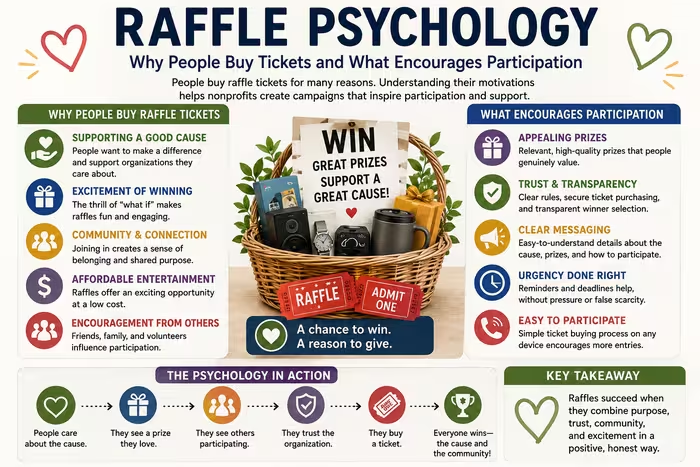
Why does someone decide to buy a raffle ticket? The answer is usually more complicated than simply wanting to win. Raffle psychology involves a combination of motivations. Someone may care deeply about the organization, like the items being offered, want to participate with friends, or simply enjoy the excitement of having a chance to win.
For nonprofits, understanding these motivations can help improve raffle participation without relying on pressure or manipulative marketing. The goal isn't to convince someone to participate at any cost. It's to present the fundraiser clearly, build trust, make participation simple, and give supporters a meaningful reason to get involved.
Why People Buy Raffle Tickets
Supporting a good cause is one of the strongest reasons someone may participate in a charity raffle. The ticket gives them an opportunity to contribute to an organization while also receiving a chance to win something they value.
There is evidence that adding a raffle incentive can change fundraising behavior. One field experiment involving charitable fundraising found that adding a raffle increased both participation and the amount raised compared with simply asking for donations. This doesn't mean every raffle will produce the same result, but it illustrates how charitable support combined with a chance to receive something can appeal to people differently from a traditional donation request.
Other participants may be motivated more by the excitement of the raffle itself. They see an item they would genuinely enjoy, decide that the ticket price is reasonable, and participate.
Community can also matter. A school parent may participate because other families are involved. Someone attending a charity event may buy tickets because it is part of the experience. A church member may participate because the fundraiser supports a project important to the congregation.
Common reasons people participate include:
- Supporting a cause they care about
- Having a chance to receive an appealing item
- Participating in a community activity
- Joining friends or family
- Supporting a school, church, club, or local organization
- Enjoying the excitement of the drawing
- Feeling connected to the fundraising mission
Rather than assuming everyone has the same motivation, nonprofits should create a campaign that speaks to several reasons for participating.
The Role of Item Appeal
The items available in a raffle can strongly influence initial interest. However, more items don't automatically make a raffle more appealing.
A smaller collection of relevant, desirable items may attract more attention than a long list of things that don't match the audience. Think about who supports your organization.
Families might respond well to family experiences, entertainment packages, restaurant vouchers, or travel opportunities. A school community might appreciate technology, local experiences, family activities, or items donated by popular businesses.
Presentation also matters. Consider these basics:
- Use clear, high-quality photographs.
- Avoid poorly lit or generic images.
- Explain exactly what is included.
- Keep item descriptions specific.
- Show multiple components together when possible.
- Avoid exaggerating the item's value.
Instead of using a vague description such as “Amazing Package,” describe what the participant could actually receive.
Emotional connection can also play a role. An experience related to the community, a unique item donated by a supporter, or something connected with the organization's mission can sometimes feel more meaningful than a generic item of similar monetary value.
Your Best Raffle Prizes guide can provide additional ideas for matching raffle items with your audience.
Supporting the Cause
For a charity raffle, the chance to win is only part of the story. The organization itself matters.
A supporter may think:
“I'd love to win this, but even if I don't, I'm helping something I care about.”
That is an important difference between a nonprofit raffle and a purely commercial competition.
Organizations should therefore explain what ticket purchases support.
Instead of:
“Buy your raffle tickets today!”
Consider:
“Your participation helps us provide new learning resources for students in our community.”
Or:
“Funds raised through this raffle will support our community outreach program.”
The National Trust's 2026 Summer Raffle provides a real-world example of this approach. Its raffle information clearly explains that profits from ticket purchases go toward its conservation mission.
Impact stories can strengthen this connection further.
Show supporters the people, programs, communities, or projects their participation helps. Keep stories authentic and avoid exaggerating what a single ticket can accomplish.
Trust and Transparency
People may hesitate to participate if they don't understand how the raffle works.
Make sure your campaign clearly answers questions such as:
- Who is organizing the raffle?
- What does the fundraiser support?
- When does ticket purchasing close?
- What items are available?
- How will the winner be selected?
- When will the drawing take place?
- How will winners be contacted?
- Where can participants find the raffle rules?
- How will the proceeds be used?
Clear information removes uncertainty. Publish accessible raffle rules and explain the drawing process. Use secure ticket purchasing and make the organization clearly identifiable.
After the raffle, announce winners appropriately and communicate the result of the fundraiser when possible.
Organizations should also be transparent about odds where applicable and required. For example, the National Trust publishes estimated odds alongside its raffle terms and explains how those estimates were determined.
Your Raffle Rules and Terms Guide can help organizers think through the information supporters may need before participating.
Social Proof and Community Participation
People often notice what their community is doing.
A supporter might see friends sharing a fundraiser, volunteers discussing it, a local business promoting it, or previous participants talking about their experience. That visibility can make the campaign feel established and active.
Nonprofits can encourage this naturally by:
- Sharing volunteer stories
- Recognizing participating businesses
- Publishing campaign updates
- Highlighting previous raffle experiences when appropriate
- Sharing authentic supporter testimonials
- Thanking community partners
- Showing real fundraising activities
You don't need statements such as:
“Everyone is buying tickets!”
That can feel exaggerated, particularly if you don't have evidence to support it.
Instead, show genuine participation:
“Thank you to everyone who has supported our raffle this week.”
Or:
“We're grateful to these local businesses for supporting our fundraiser.”
Real community activity is more trustworthy than manufactured popularity.
Urgency Without Pressure
Deadlines naturally influence raffle participation. Someone may see the fundraiser early in the campaign and think, “I'll come back later.” Without a reminder, they may forget.
This is where genuine urgency becomes useful. As the real closing date approaches, reminders might include:
- One week remaining
- Three days remaining
- Tomorrow is the final day
- Ticket sales close tonight
These reminders aren't manipulative when the deadline is real. Problems arise when organizations manufacture urgency.
“Only a few tickets remaining” should only be used when ticket quantities are genuinely limited and that statement is accurate.
Likewise, repeatedly announcing a “final chance” and then extending the raffle can weaken trust. Your deadline should help supporters make a timely decision, not pressure them with misleading information.
Ticket Price and Perceived Value
Ticket pricing should be easy to understand. Supporters should immediately know how much participation costs and what they receive.
For example:
Ticket Option Example:
- Price 1 x ticket = $55
- Price 2 x tickets = $100
- Price 3 x tickets = $145
(These are examples only, not recommended prices)
The appropriate pricing structure depends on the audience, items, fundraiser, and applicable regulations. The important point is clarity.
Don't make supporters calculate complicated packages or search through several pages to understand ticket options. Audience expectations also matter. A community fundraiser with modest items may need a different approach from a major fundraising campaign offering a high-value experience.
Organizations should also verify applicable raffle laws before setting ticket structures because raffles are regulated differently across jurisdictions.
Making Participation Easy
Interest can disappear quickly if purchasing tickets becomes difficult.
Imagine someone discovers your raffle through Instagram. They click the campaign link, but then they have to navigate through the homepage, find the fundraising section, locate the raffle, create an unnecessary account, search for the ticket options, and complete a complicated checkout.
Some people simply won't finish. A better journey is:
Social post → Raffle page → Ticket selection → Purchase → Confirmation
Mobile accessibility is particularly important because supporters may discover your fundraiser while using their phones.
Test the campaign yourself and check:
- Can you immediately understand the fundraiser?
- Are the available items clear?
- Can you easily find the ticket options?
- Is the closing date visible?
- Does the payment process work?
- Is confirmation immediate and understandable?
- Does everything work properly on mobile?
QR codes can also make participation easier at physical events by connecting posters, signs, or displays directly to the online raffle page. Convenience won't create interest by itself, but unnecessary friction can prevent interested supporters from participating.
Ethical Messaging That Encourages Participation
Good raffle messaging gives people a reason to care without making them feel pressured.
Effective messaging starts with accurate information. Explain the mission. Show the available items clearly. Tell supporters when the raffle closes. Explain how to participate. Then allow them to decide.
Positive messaging can create excitement without relying on guilt, fear, or misleading scarcity.
Combining Mission and Item Messaging
One common question is whether a raffle should focus primarily on the cause or the chance to win.
Usually, you don't need to choose. The two messages can work together.
An item-focused social media post might say:
“Win a weekend getaway while supporting our youth programs.”
A mission-focused post might say:
“Help us provide more opportunities for local students and get the chance to win one of this year's raffle items.”
This gives the campaign variety. Someone primarily motivated by the item may discover the organization's mission after clicking. An existing supporter primarily motivated by the cause may appreciate receiving a chance to win as part of their participation.
The combination is one of the characteristics that makes raffle fundraising different from simply asking for donations.
Common Messaging Mistakes
Focusing Only on What Someone Can Win
If every campaign message is about items, supporters may lose sight of why the organization is fundraising.
Better approach: Include mission-focused posts throughout the campaign.
Barely Showing the Items
If someone doesn't understand what the raffle offers, they may not feel enough interest to participate.
Better approach: Use clear descriptions and quality images.
Unclear Instructions
Don't make supporters guess how to enter.
Better approach: Provide a clear ticket link and simple instructions.
Too Much Urgency
Constant “last chance” messaging can become tiring and reduce credibility.
Better approach: Save countdown messaging for genuine deadlines.
Weak Descriptions
“Great raffle item available!” tells the reader very little.
Better approach: Explain exactly what the item includes.
Missing Trust Signals
An unfamiliar supporter may need more reassurance than someone who already knows your organization.
Better approach: Make the nonprofit identity, fundraising purpose, rules, drawing information, and ticket process easy to find.
Frequently Asked Questions
Why do people buy raffle tickets?
People participate for different reasons. They may want to support the organization, like the available items, enjoy the excitement of potentially winning, participate in a community activity, or respond to encouragement from friends and family.
Does item value affect ticket sales?
Item appeal can influence interest, but monetary value isn't the only consideration. Relevance to the audience, uniqueness, presentation, and emotional appeal can also matter. An item people genuinely want can be more compelling than several unrelated options.
How important is the charity cause?
For nonprofit raffles, the cause can be a significant part of the motivation. Supporters may value having both an opportunity to win and an opportunity to contribute to an organization they care about.
Does social proof encourage participation?
Seeing genuine community involvement can make a fundraiser feel more established and relevant. Nonprofits can show this through volunteer stories, sponsor recognition, supporter testimonials, campaign updates, and previous raffle experiences without inventing participation numbers.
How can I create urgency ethically?
Use real deadlines. Tell supporters when ticket sales close and provide appropriate reminders as that date approaches. Avoid artificial scarcity, false countdowns, or repeatedly extending a supposedly final deadline.
What makes people trust an online raffle?
Clear rules, recognizable organization information, transparent ticket pricing, secure purchasing, accurate item descriptions, clear drawing procedures, and appropriate winner announcements can all strengthen trust.
Create Raffle Experiences Supporters Trust
Understanding raffle psychology doesn't mean finding tricks that make people buy more tickets. It means understanding why different supporters participate and creating a fundraising experience that respects those motivations.
Some people care most about the mission. Others initially notice an appealing item. Some enjoy participating alongside their community. Many are influenced by a combination of all three.
The nonprofit's job is to bring those elements together honestly.
Present attractive items clearly, explain why the fundraiser matters, make participation easy, communicate genuine deadlines, and show supporters that the raffle is being managed responsibly.
GalaBid helps nonprofits present raffle items, manage online ticket sales, communicate campaign information, and create a straightforward fundraising experience that supporters can understand and trust.
More advice articles about Raffle
About GalaBid
Ideal for donations. Perfect for Raffles. Awesome for Live and Silent Auctions! GalaBid’s online fundraising platform is designed for fundraisers of all types and sizes. For over 10 years we’ve been helping non-profits, charities, community clubs, churches, schools, and individuals to raise more and make a difference.