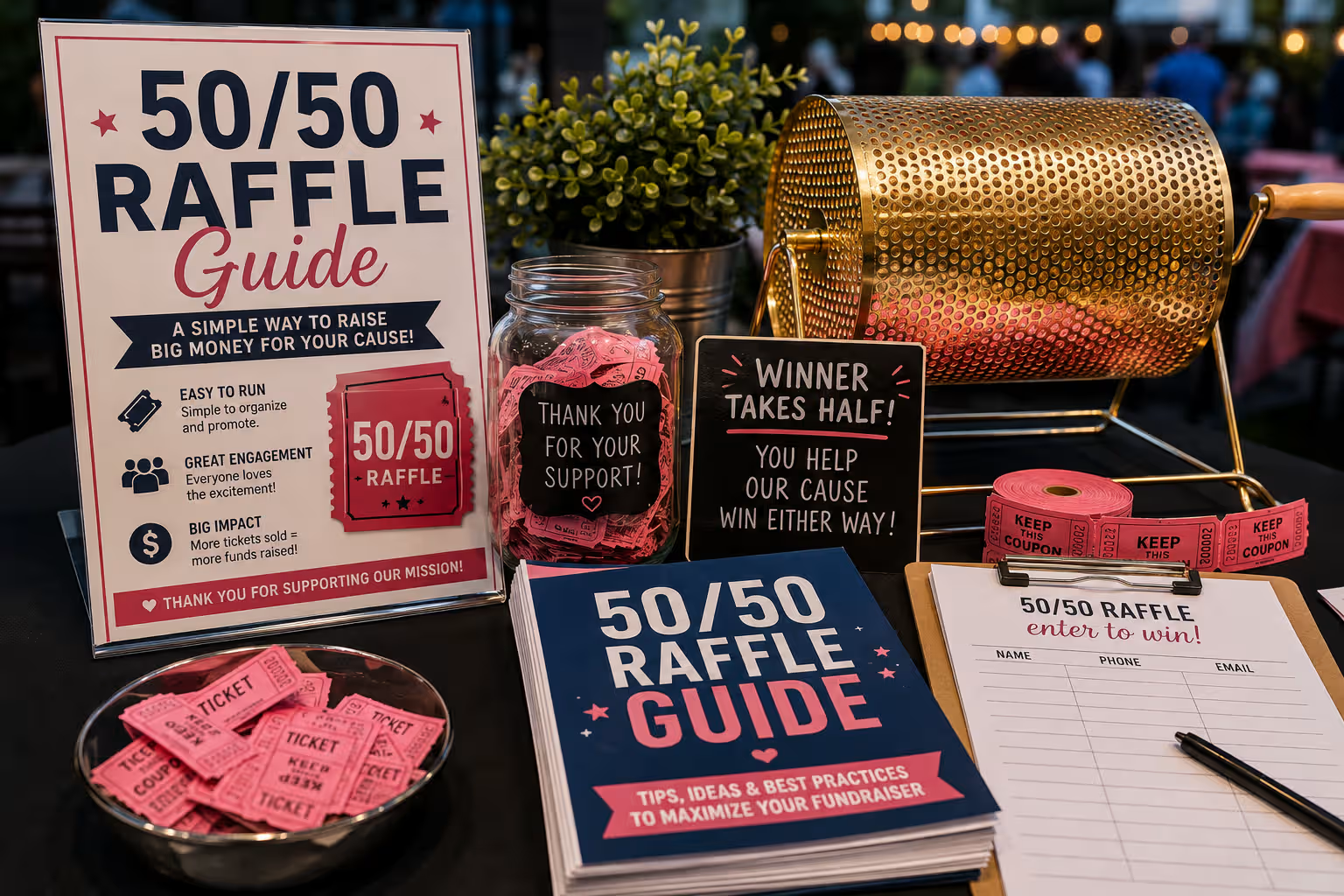
Ask any volunteer who's spent a weekend soliciting gift baskets for a traditional raffle, and they'll tell you the hardest part usually isn't selling tickets. It's finding something worth putting on the table in the first place. That's the appeal of a 50/50 raffle: there's no prize to source, because the prize is the money itself. Supporters buy in, the pot grows in front of everyone, and at the end one winner walks away with half of it while the other half goes straight to your cause. It's simple enough to explain in one sentence and flexible enough to work at a school football game, a church supper, or a formal gala. Here's exactly how it works, how to run one well, and where organizers tend to trip themselves up.
What Is a 50/50 Raffle?
Strip away the terminology and a 50/50 raffle is just this: everyone who buys a ticket is contributing to one shared pot, and when it's time to draw, that pot gets split in half. One name gets pulled, that person takes half the money, and your organization keeps the rest.
That's a meaningfully different setup from a traditional raffle, where someone has already decided the prize is a smart TV or a weekend at the lake before a single ticket sells. With a 50/50, nobody knows the exact prize amount until sales close. It climbs with every ticket, which is exactly why these tend to build momentum of their own in the final hour before a drawing.
Because a prize doesn't need to be sourced, a 50/50 can go from idea to launched in an afternoon. That's a big part of why it shows up so often as the thing bolted onto a bigger event, a gala, a walkathon, a season opener, rather than something planned months in advance on its own.
How a 50/50 Raffle Works
1. Tickets go on sale
Supporters buy in online, in person, or both, at whatever price you've set.
2. The pot builds
Every ticket sold adds to the total. Plenty of organizers put a running total on a poster, a screen, or a live page so people can watch it grow. It's genuinely part of the fun.
3. Sales close, and the draw happens
At the date and time you've announced, a winning ticket gets pulled at random.
4. The winner is announced
Live at the event, on social media, over email, however you've said you'd do it, that's when the amount they've won gets confirmed.
5. The prize is paid out
Half goes to the winner, half stays with the organization.
Here's what that actually looks like with real numbers: sell 500 tickets at $10 apiece and you've got a $5,000 pot, $2,500 to the winner and $2,500 for your programs. A smaller crowd selling 100 tickets at $5 raises $500, splitting $250 and $250. A bigger draw, say 1,000 tickets at $20, raises $20,000 and splits $10,000 each way. The dollar amount is entirely a function of your audience and your price point, but the split itself never moves.
One variation worth knowing about: some organizations split the winning half among several people instead of handing it all to one person. A $5,000 prize pool might become five winners at $500 each rather than one winner at $2,500. It's a reasonable choice for a bigger event where you'd rather have five "we have a winner!" moments than one, just decide on it before tickets go out the door, and say so plainly in your rules. Nothing sours a raffle faster than a winner finding out after the fact that the payout wasn't what they expected.
Why Nonprofits Choose 50/50 Raffles
Talk to enough event organizers and the same handful of reasons come up:
Nothing to source
No donor relationships to manage, no items to photograph, no logistics around storing or delivering a prize.
Low cost to get going
The prize is funded by the tickets themselves, so there's rarely a separate budget line to justify beforehand.
Genuinely flexible
It works as its own fundraiser or tucked inside something bigger, a gala, a silent auction night, a season opener.
Fits almost any crowd
A high school gym and a black tie dinner can both run the exact same format without changing much of anything.
What none of this tells you is how much you'll actually raise. That comes down to how many people show up and what they're willing to pay per ticket, not the format itself. A raffle at a packed gala with 300 attendees paying $20 a ticket is going to behave very differently than one run quietly at a Tuesday night board meeting. Set your expectations based on your own crowd, not a number you saw somewhere else.
Planning a Successful 50/50 Raffle
Set a goal before you set a price
Knowing what you're actually hoping to raise makes every other decision easier.
Decide on ticket pricing
A single ticket price plus a discounted bundle (say, three for the price of two) tends to nudge people toward buying more than one.
Pick a drawing date with some runway
Enough time to actually sell tickets, but close enough that people feel the deadline coming.
Line up your volunteers early
Someone sells tickets, someone tracks the totals, someone runs the actual draw. Assign these before launch day, not during it.
Give promotion real lead time
A raffle announced the morning of the drawing won't raise what one promoted for two weeks will.
Decide how you'll announce the winner
Planning this in advance can help your cause maximize the moment on social media.
How to Increase Ticket Sales
Sell everywhere, not just in the room
Anyone who can't make it to the event in person should still be able to buy a ticket online.
Bundle it
A slight discount on multiple tickets consistently gets people to buy more than they planned to.
Keep posting as the pot grows
A raffle that's only mentioned once at launch fades from people's minds. One that shows the pot climbing stays visible.
Let supporters do some of the sharing
A personal share from a ticket buyer to their own network often outperforms anything official you post.
Put a QR code on everything
Table tents, flyers, event programs, a quick scan beats typing a URL every time. Our guide to QR codes for charity raffles walks through the details.
Announce totals as they climb
People like watching a number grow, and they like being part of what pushes it higher. For more on this, see our guide to promoting a charity raffle on social media.
Common 50/50 Raffle Mistakes
Rules nobody can find
If a supporter has to ask a volunteer how the split works or when the drawing happens, you've already lost some sales. Publish the rules somewhere obvious before tickets go live.
Promoting once and moving on
A raffle announced only at launch quietly dies. The ones that sell well get mentioned again, and again, right up to the deadline.
Pricing that scares off casual buyers
A ticket priced too high stops someone from grabbing two or three on impulse. A lower entry price with a bundle option usually outperforms a single high price point.
Assuming everyone understands the format
Not every supporter knows that the prize grows with sales. Some assume it's a fixed amount. Say it outright in your promotion: the more tickets sell, the bigger the prize gets.
Letting key dates get lost
If people don't know exactly when sales close and when the drawing happens, plenty will simply miss it. Repeat the dates everywhere.
Sitting on the announcement
A delayed winner announcement, or a delayed payout, is exactly the kind of thing that makes people quietly stop trusting your next raffle. Announce it, and follow through, as soon as you reasonably can.
Legal Considerations
Rules on raffles, 50/50 formats included, vary by country, state, and sometimes even by city or county, and can cover everything from registration to how tickets may be sold. Check your local licensing requirements before you launch, publish clear rules for participants, and confirm your organization actually qualifies to run a raffle where you're located.
50/50 Raffle Planning Checklist
FAQ
What is a 50/50 raffle?
A fundraiser where every ticket sold adds to one shared prize pool. When the drawing happens, the winner takes half the pool and the organization keeps the other half.
How is the prize calculated?
It's simply half of whatever total ticket revenue was collected before the draw. Sell $3,000 in tickets, and the winner takes $1,500 while the organization keeps $1,500.
Can I run a 50/50 raffle online?
A good online raffle platform can streamline the whole process. Many organizations sell tickets online alongside in person sales, though whether that's allowed depends on where you're located. Check local rules before selling digitally.
How much should tickets cost?
There's no universal right answer for determining the best pricing strategy. It depends on your audience and your goal. A common approach is a modest single ticket price paired with a discounted bundle to encourage larger purchases.
Do I need raffle rules?
Yes. Clear published rules covering the split, the drawing date, and eligibility build trust with buyers, and in many places they're a legal requirement, not just good practice.
Are 50/50 raffles legal?
It depends entirely on where you are. Rules vary by country, state, and sometimes locally. Always verify your local regulations before selling a single ticket.
More advice articles about Raffle
About GalaBid
Ideal for donations. Perfect for Raffles. Awesome for Live and Silent Auctions! GalaBid’s online fundraising platform is designed for fundraisers of all types and sizes. For over 10 years we’ve been helping non-profits, charities, community clubs, churches, schools, and individuals to raise more and make a difference.