Choosing ticket types for a fundraising event starts with understanding how people are likely to attend.
Some events only need one straightforward admission ticket. Others have supporters buying individual seats, companies taking whole tables, families attending together or people who are willing to pay more for an enhanced experience.
The aim is not to create as many options as possible. It is to give people the choices they genuinely need, while keeping the ticket page easy to understand.
This guide explains the main ticket types to consider, how to decide which ones suit your event and when keeping things simple is the better option.
Why Your Ticket Structure Matters
Your ticket structure shapes more than the checkout page. It affects how easy the event is to understand, who feels able to attend and how smoothly the event can be managed.
A clear structure helps supporters quickly recognise the option that suits them. Someone buying one seat should not have to work through table packages, while a company bringing a group should not need to complete multiple individual purchases if a table option would be simpler.
Different ticket types can also help you include audiences who may need a different route into the event. That could mean a family ticket for a community fundraiser, a student option for a younger audience or a premium ticket for supporters who want an enhanced experience.
The important part is that every option has a purpose. Adding more ticket types does not automatically improve the event. The structure works best when each choice makes attending easier or offers something meaningfully different.
Start By Separating Ticket Types From Pricing Tactics
Ticket types and ticket prices are related, but they are not the same decision.
A ticket type gives someone a meaningfully different way to attend. An individual ticket and a table of ten are different ticket types because they are bought differently. A VIP ticket can also be a separate type when it includes additional benefits.
An early bird price usually does something different. The supporter receives the same ticket and the same event experience, but pays less because they booked during a particular period.
The same applies to discount codes. They change what someone pays without necessarily changing what they are buying.
Making that distinction early can stop your ticket page becoming unnecessarily complicated.
If you are deciding how much to charge, our guide to pricing nonprofit event tickets covers that separately. Our guide to early bird vs. full price ticketing looks specifically at whether and when to change the price over time.
The Main Ticket Types To Consider
You will not need every option below. Think of them as possible building blocks rather than a checklist.
How To Choose Ticket Types For Your Fundraising Event
1. Look At How People Will Attend
Start with the event itself.
Will most people buy one or two places? Will companies bring groups? Are committee members likely to fill a table? Are families attending together?
For an event where supporters mostly attend individually or in pairs, a standard admission ticket may be enough.
For a gala where some purchasers want to bring eight or ten people, adding a table option can make the purchase much easier. One person secures the group rather than asking every attendee to complete a separate transaction.
Some events benefit from offering both.
A company can buy a complete table while an individual supporter can still attend without having to organize a group.
If that is a key decision for your event, our guide to individual tickets vs. tables for a charity gala looks at the advantages of each approach in more detail.
2. Identify Groups With Genuinely Different Needs
Next, think about the people you want in the room.
You might have individual supporters, corporate groups, students, families or long-standing supporters who want to contribute at a higher level.
That does not automatically mean each group needs a different ticket.
Create a separate option when it makes attending easier, changes what someone receives or reflects a genuinely different type of purchase.
For example, a family ticket may simplify buying for a community event. A table package can make sense when companies regularly attend as groups. A student ticket may help an organization include a younger audience that might otherwise find the event inaccessible.
If two groups receive the same thing and can comfortably use the same purchasing route, a separate ticket type may add complexity without adding much value.
3. Decide Whether A Premium Ticket Has Enough Value
VIP and premium tickets can work well when the additional benefit is easy to understand.
That might include better seating, access to a separate reception, a limited experience or another benefit that is genuinely different from standard admission.
Before creating the ticket, try completing this sentence:
Our premium ticket includes ______ that standard admission does not.
If the answer is difficult to explain, think carefully about whether you need the extra tier.
Calling something VIP does not make it valuable. The distinction should be obvious from the ticket description.
If every attendee receives essentially the same experience, one ticket type may be clearer.
How To Position Different Ticket Levels
Different ticket types should feel like choices, not status labels.
For premium tickets, focus on the added experience, such as reserved seating, a reception or another clear benefit. Avoid language that suggests standard admission is a lesser version of the event.
For student, youth or concession tickets, explain that the option is there to make the event more accessible to a particular group. The experience does not need to be described as reduced simply because the price is lower.
Keep the wording practical. Make it clear what each ticket includes and let supporters choose the option that suits them.
4. Consider Whether Accessibility Needs Its Own Option
A fundraising event can have more than one objective. Raising funds may be central, but you may also want to involve a broad section of your community.
Depending on the event, that could make a student, youth, family or concession ticket worth considering.
The important point is to make the purpose clear.
A lower priced option does not need to imply a lesser experience. It may simply make the event accessible to people you particularly want to include.
Avoid creating discounted categories automatically. Start with the audience you want to reach and decide whether price is actually a barrier for that group.
5. Keep Sponsorship Separate From Admission Where Possible
Ticketing and sponsorship often meet at gala events.
A company may buy a table for its team. Another company may pay more for a package that includes a table plus logo placement, recognition or other sponsor benefits.
Those are not necessarily the same purchase.
If someone simply wants ten seats, they should be able to understand how to buy ten seats. A business considering sponsorship needs to understand what it receives in addition to admission.
Separating those two ideas makes both offers easier to explain.
A table can be a ticket type. A sponsorship package is a wider commercial or fundraising arrangement that may include tickets.
How Many Ticket Types Should You Offer?
There is no number that is right for every fundraising event.
Instead, ask whether each option has a clear purpose.
Suppose you offer:
- General Admission
- Table of 10
- VIP Admission
That can be a logical structure when individuals, groups and premium purchasers all behave differently.
Now consider:
- Supporter
- Silver Supporter
- Gold Supporter
- Champion
- Patron
If every option buys essentially the same admission, supporters may have to work harder to understand what the differences mean.
More choice is not automatically more helpful.
For each ticket type, ask:
- Who is it for?
- Why would that person choose it?
- Is the difference obvious from the ticket page?
If those questions are difficult to answer, the option may not need to exist.
Ticket Types For Different Fundraising Events
The right structure depends on how people are likely to attend and whether different groups need genuinely different options.
Nonprofit Gala
A gala where both individuals and companies attend might offer Individual Admission and a Table of 10. Add a VIP option only if it includes a clearly different experience, such as reserved seating or a separate reception.
If most supporters attend individually, there may be no need to offer tables at all.
School Or PTA Fundraiser
A simple school event may only need one admission ticket. If both adults and children pay to attend, separate Adult and Child tickets can make the options clearer.
For family-focused events, a Family Ticket can be useful if it makes booking simpler. Larger school galas may also need individual tickets, tables or sponsorship packages.
If you are planning a school event, our guide to school and PTA fundraiser ticketing covers ticket structure and setup in more detail.
Community Fundraiser
Start with General Admission unless there is a clear reason to add another option.
A family ticket can help when families make up a significant part of the audience. A concession or free ticket may also be appropriate when accessibility is an important part of the event.
Corporate Fundraising Dinner
If companies commonly bring colleagues or clients, the natural purchase may be a Table rather than an individual seat.
You can still offer individual tickets for other supporters. Keep sponsorship packages separate so companies can easily see the difference between buying seats and receiving additional sponsor benefits.
Virtual Fundraising Event
Virtual events often need fewer ticket types.
A single access ticket may be enough. Add another option only if it changes what someone receives, for example access to additional content, or if you want to provide a concession or supporter option.
If you are planning an online event, our guide to virtual nonprofit event ticketing covers ticket structure and access in more detail.
Name Ticket Types So People Understand Them
Clear names are usually more useful than clever ones.
Names such as General Admission, Table of 10, Student Ticket and VIP Admission tell people what they are looking at immediately.
More distinctive names such as Supporter, Champion or Patron can work, particularly when they fit the campaign. The risk is that the supporter has to decode the hierarchy before deciding what to buy.
Whatever you call the ticket, the description should quickly explain who it is for, how many people it admits and what it includes.
For example, "Table of 10, includes event admission for ten attendees" is clearer than simply calling the item "Table Ticket."
The same principle applies to premium options.
"VIP Admission, including reserved seating and access to the pre-event reception" explains the difference.
"VIP Experience" leaves the purchaser to work it out.
Check Your Ticketing Platform Can Support Your Structure
Once you know which ticket types you want to offer, check that your ticketing platform can manage them without creating extra work.
Depending on your event, you may need to:
- Sell both individual and group or table tickets
- Set limits for particular ticket types
- Collect attendee information after purchase
- Keep different ticket types clear at check-in
- Track sales by ticket type
- Manage transfers, changes or refunds
The right setup should support the structure you have chosen rather than force you into a simpler or more complicated model.
How GalaBid Handles Ticket Types
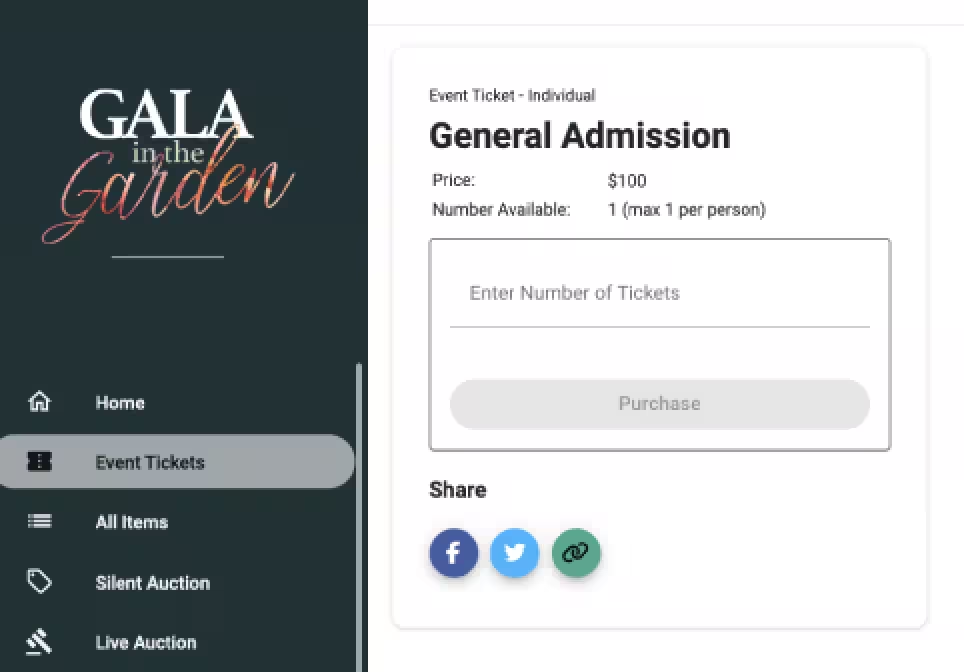
GalaBid's event ticketing is built around two underlying formats: individual tickets and multi-ticket purchases such as tables. Organizers can create multiple ticket types, make them free or paid, and set capacity at both ticket and event level.
That means the public-facing ticket names can reflect your event. For example, you might create General Admission as an individual ticket, a complimentary individual ticket for a particular group, and a Table of 10 as a multi-ticket option.
For table purchases, the purchaser can assign the included seats to attendees after buying. They do not have to know every attendee's details at checkout. They can return later to assign the remaining seats, while GalaBid sends invitations to the people they add.
You can also add ticketing questions to collect information such as dietary requirements or seating preferences when a ticket is assigned.
On the organizer side, ticket status, attendee details and check-in can be managed from the campaign. Event staff can check people in manually or by QR code using a mobile device.
The practical point is that your ticket structure should come first. Decide what your supporters need to buy, then configure the platform around those choices.
Keep Early Bird Pricing Separate From Ticket Structure
It is easy to end up treating every price variation as a new ticket type.
Suppose your event has General Admission and VIP Admission.
You could choose to sell General Admission at an early bird price for a limited period. The supporter is still buying General Admission. What has changed is when they bought it, not the experience they receive.
Keeping the two decisions separate makes the ticketing plan easier to manage.
First decide what people can buy.
Then decide what each option should cost and whether that price changes over time.
That is why pricing and early bird ticketing strategy are better handled separately rather than built into every ticket type
When One Ticket Type Is Enough
Multiple ticket types are useful when they solve different needs. If they do not, simplicity can be an advantage.
One ticket type may be enough when everyone receives the same experience, most people attend in the same way and you do not have a clear reason to create premium or concession options.
It can also make sense for a first-time event when you do not yet know whether your audience needs additional choices.
You can use what happens at the first event to guide the next one.
Did people repeatedly ask whether they could buy a table? Did families ask about group admission? Did companies want sponsorship rather than tickets? Did hardly anyone choose one of the options you created?
Those are useful signals because they come from your own supporters.
Review Your Ticket Structure After The Event
Do not assume this year's structure should automatically become next year's.
Look at which ticket types sold, which sold quickly and which attracted little interest.
Also look beyond sales numbers.
Were supporters clear about what each option included? Did purchasers repeatedly contact you with the same question? Did table purchasers find the process manageable? Was there a type of purchase people wanted that you had not offered?
Your own event data should become the starting point for the next event.
A ticket option that seemed important during planning but attracted little interest may not need to return. Repeated requests for something you did not offer may tell you where the structure needs to change.
A Simple Final Check
Before opening ticket sales, look at every option on the page and ask yourself three questions.
Who is this for?
You should be able to describe the intended purchaser clearly.
Why would they choose it?
There should be a meaningful reason to select it instead of another option.
Will they understand the difference immediately?
The name and description should do most of the explaining.
If an option fails one of those tests, simplify it.
Choosing ticket types for a fundraising event is ultimately about making it easy for different supporters to take part in the way that suits them. Start with how people will attend, add options where they solve a genuine need, and keep pricing decisions separate from the structure itself.
The result should be a ticket page where every choice has a clear purpose and it's obvious to everyone which one to purchase.
FAQ
How Many Ticket Types Should You Offer?
Start with one core admission option, then add another ticket type only when a distinct group needs to buy differently, such as a table, premium, family or concession ticket.
There is no number that is right for every fundraising event. Instead, ask whether each option has a clear purpose.
For each ticket type, ask:
- Who is it for?
- Why would that person choose it?
- Is the difference obvious from the ticket page?
If those questions are difficult to answer, the option may not need to exist.
What If No One Buys The VIP Ticket?
That usually means the additional benefits were not compelling enough, the price difference was too high, or your audience did not value the premium option. Review it after the event rather than automatically offering it again.
Should We Always Offer A Student Or Concession Ticket?
No. Only create one if it helps you reach a group you genuinely want to include and price is likely to be a barrier.
Can We Use Ticket Tiers And Early Bird Pricing Together?
Yes. Ticket tiers define what someone is buying, while early bird pricing changes what they pay depending on when they buy. For example, you might offer General Admission and VIP tickets, with an early bird price for General Admission.
More articles about Ticketing & Check-in for Fundraising Events
About GalaBid
Ideal for donations. Perfect for Raffles. Awesome for Live and Silent Auctions! GalaBid’s online fundraising platform is designed for fundraisers of all types and sizes. For over 10 years we’ve been helping non-profits, charities, community clubs, churches, schools, and individuals to raise more and make a difference.