Running an online raffle in the UK is one of the most cost-effective ways to fundraise, but the platform you choose affects how much of the money actually reaches your cause. Fees range from nothing at all to 10% or more of ticket sales, and UK raffles must comply with the Gambling Act 2005, which not every platform is set up to support.
This guide compares the best raffle software and platforms available to UK charities, schools, sports clubs and community groups in 2026, with fees in pounds, UK compliance considerations and the practical differences that matter when it comes to the draw.
Quick comparison
What UK fundraisers should look for
Platform fees and VAT. A percentage fee comes straight off your fundraising total, and some UK providers add VAT on top. On a £10,000 raffle, a 10% commission costs your cause £1,000. A 5% fee plus VAT costs £600. Check whether quoted fees include VAT before you compare.
Where the money goes. Some platforms hold your funds in their own account and pay out after the draw. Others route payments directly to your organisation's Stripe or bank account as tickets sell. Direct payment means no waiting, no platform float and no counterparty risk.
Gambling Act compliance. Most UK charity raffles run as small society lotteries registered with the local licensing authority. Your platform should let you display your registration details, restrict entry to people aged 16 and over, and give you the records you need for your post-draw return. See the compliance section below.
Draw integrity. Look for certified random draws with a clear audit trail. Supporters trust raffles more, and buy more tickets, when the draw is demonstrably fair.
Event features. If your raffle runs alongside a gala dinner or live event, check for QR code entry, live countdown draws and the ability to combine the raffle with an auction, ticketing and donations in one campaign.
1. GalaBid
GalaBid's raffle software is free to use on the standard plan. Supporters are prompted to tip GalaBid at checkout, and the tips fund the platform. In addition, your organisation receives 10% of every tip as an extra revenue line. Tips are optional and fundraisers who prefer their supporters are not asked for tips can switch to a fee-based plan instead.
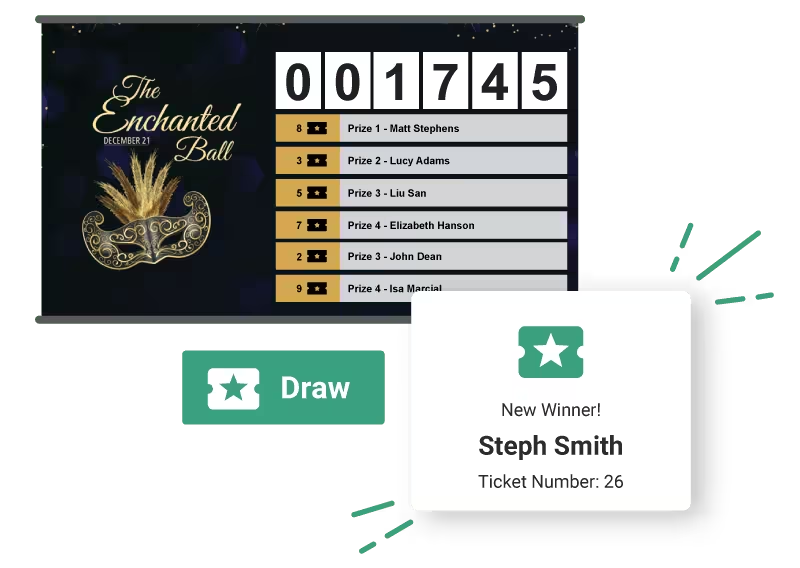
Payments go directly to your organisation through Stripe. GalaBid never holds, delays or touches your funds, so there is no waiting for a post-draw payout. Each raffle gets its own link and QR code, draws run as live countdowns with certified random winner selection, and tickets are delivered by email and text.
GalaBid has supported fundraisers since 2011 and operates across the UK, Ireland, Europe, Australia, New Zealand and North America. The biggest practical advantage for event fundraisers: a raffle can sit in the same campaign as a silent auction, event ticketing and donations, so guests register once and everything appears on one page.
Fees: Free on the standard plan (optional supporter tips). Fee-based plans available. Best for: Charity raffles, gala and event raffles, and campaigns combining raffles with auctions, ticketing and donations.
2. Raffall
Raffall is a UK-based raffle and prize competition platform used heavily by influencers, brands and individuals as well as charities. It handles winner selection and payments, and its Raffall Guarantee compensates winners if a host fails to deliver a prize.
For fundraising raffles, Raffall charges a 10% commission on ticket sales. Non-charity competitions on the free plan pay 15%, reduced to 10% on paid subscriptions (£8 to £83 per month plus VAT). Hosts are responsible for promoting their own raffles, and optional paid features such as email invites and featuring cost extra.
Fees: 10% of ticket sales for charity fundraising; 15% standard on the free plan. Best for: Individuals and influencers running standalone prize competitions.
3. Jumblebee
Jumblebee is a UK fundraising platform offering prize draws alongside its core silent auction product. It has run over 15,000 campaigns across 12 years and is a familiar name among UK schools and charity ball organisers.
Jumblebee's auction fee is 5% plus VAT of totals raised, with card fees of 2.4% plus 20p per transaction if Jumblebee collects payment for you. Funds are held in an FCA-regulated client account and transferred to your bank account once all payments are collected, so expect a gap between the draw and your payout.
Fees: 5% plus VAT, plus card fees where Jumblebee collects payment. Best for: UK schools and charities already running a Jumblebee auction who want a draw alongside it.
4. Givergy
Givergy is best known for silent auctions and managed gala events, but its platform also includes prize draws and raffles, so it appears on UK fundraisers' shortlists, particularly where a raffle runs alongside an auction Givergy is already delivering. Its "keep it FREE!" option is funded by voluntary donor contributions at checkout, with customised paid packages for staffed, managed events.
In March 2026 Givergy merged with US text-messaging platform Tatango to form momoGood, majority-owned by American private equity firm Edison Partners, so the product and UK team are in a period of transition. For a standalone raffle it is a heavier option than the specialists on this list.
Fees: Free tip-funded option; custom paid packages. Best for: Raffles running alongside a Givergy-managed gala auction.
5. Zeffy
Zeffy is a Canadian fundraising platform that launched in the UK in October 2025. It charges no platform or transaction fees and is funded by voluntary contributions that donors are asked to add at checkout. It offers raffles alongside donation forms, ticketing and a built-in CRM.
Zeffy is a credible zero-fee option for registered charities, though it is a recent arrival in the UK market and its heritage is North American online fundraising rather than UK events. Organisations that run gala nights or need on-the-night raffle draws alongside auctions should check the event features fit before committing.
One thing to weigh: Zeffy's model depends entirely on the voluntary contributions requested from supporters at checkout, and there is no fee-based plan to switch to instead. At the time of writing, the suggested contribution on a Zeffy checkout can be up to 17% of the transaction, and choosing a lower amount takes an extra step. UK supporters are generally less accustomed to platform tipping than North American donors, so run a test transaction and check what your ticket buyers will see before committing. Platforms like GalaBid let you switch to a fee-based plan with no tipping if that fits your audience better.
Fees: No platform fees; donors are asked for a voluntary contribution at checkout. Best for: Small UK charities running simple online raffles with no event component.
UK raffle rules: the short version
Under the Gambling Act 2005, a paid-entry raffle is legally a lottery. Most charity raffles fit one of two categories:
Incidental non-commercial lotteries. Tickets sold and the draw held entirely at a single event, such as a school fete or fundraising dinner. No registration required.
Small society lotteries. Tickets sold in advance or online. These must be registered with your local licensing authority (£40 initial fee, £20 annual renewal). Key limits: no more than £20,000 in ticket sales per draw, £250,000 across all draws in a year, a maximum single prize of £25,000, at least 20% of proceeds to your cause, entry restricted to those aged 16 and over, and a return submitted to the council within three months of the draw.
Note that Gift Aid never applies to raffle tickets. HMRC treats a ticket as payment for a chance to win, not a donation.
For the full picture, read our guide to UK raffle rules and whether you need a licence.
Which raffle platform is best for UK fundraisers?
For standalone influencer-style competitions, Raffall's guarantee model works well. Givergy fits raffles bolted onto a managed gala. For simple online-only charity raffles, Zeffy's zero-fee model is worth a look, with the tipping caveat above. But for UK charities, schools and clubs that want a raffle as part of a wider fundraising campaign, with tickets sold online and at the event, a live countdown draw, and funds paid directly to your account with no platform fee, GalaBid is the strongest option.
Start your free raffle with GalaBid
FAQs
Do I need a licence to run an online raffle in the UK? If tickets are sold in advance or online, you will normally need to register as a small society lottery with your local licensing authority (£40 initially, £20 per year to renew). Raffles sold and drawn entirely at one event need no registration.
Can we claim Gift Aid on raffle tickets? No. HMRC treats raffle tickets as payment for a chance to win a prize, so Gift Aid does not apply, on any platform.
How much can we raise in one raffle? A small society lottery is capped at £20,000 in ticket sales per draw and £250,000 per year across all draws. Beyond that you need a Gambling Commission operating licence.
What age must entrants be? Small society lottery tickets can only be sold to people aged 16 and over.
How much does raffle software cost in the UK? Anywhere from free to 10% or more of ticket sales. GalaBid's standard plan is free, funded by optional supporter tips, with 10% of tips shared back to your cause.
More advice articles about Raffle
About GalaBid
Ideal for donations. Perfect for Raffles. Awesome for Live and Silent Auctions! GalaBid’s online fundraising platform is designed for fundraisers of all types and sizes. For over 10 years we’ve been helping non-profits, charities, community clubs, churches, schools, and individuals to raise more and make a difference.