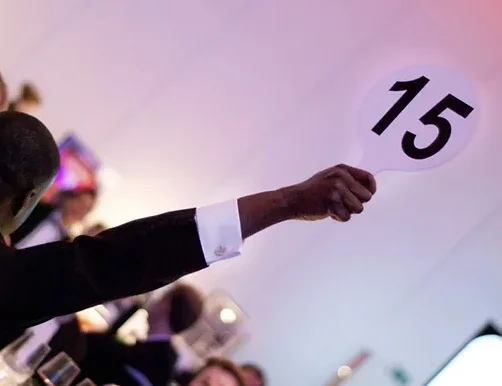
The live auction is usually the highest-earning fifteen minutes of a fundraising event. A handful of standout items, a good auctioneer and a room full of engaged guests can raise more in a quarter of an hour than the rest of the evening combined.
It can also be twenty-five minutes of a nervous MC auctioning a signed sports jersey to a room that has collectively decided to check its phones.
The difference between the two is planning. This guide covers how to run a live auction from start to finish: choosing and ordering your items, briefing the auctioneer, timing the auction within your event, keeping the room engaged, and collecting the money without a queue forming at a cash box at 11pm.
.jpg)
What is a live auction?
A live auction is an in-person auction led by an auctioneer. Guests bid by raising a hand or paddle, the auctioneer drives the price upward, and the item sells to the highest bidder in the room.
It differs from a silent auction, where guests bid independently on their phones or on bid sheets over a longer period. Most fundraising events run both: a silent auction open throughout the evening with a larger catalogue, and a short live auction reserved for the few most valuable items.
Step 1: Choose the right items (and the right number)
The most common live auction mistake is running too many lots. Aim for five to eight items. Nobody has ever left a gala saying "I just wish the auction had gone on longer," and by lot eleven even your most generous supporter is bidding on the dessert trolley to make it stop.
Every live lot should be something the silent auction cannot do justice to: unique experiences, one-of-a-kind access, luxury travel, items with a story. If an item would sell fine on a phone screen, put it in the silent auction and protect your live lots.
If your item pipeline is thin, consignment items can fill the gaps. GalaBid offers no-risk auction items on sale or return: if an item does not sell you pay nothing, and everything raised above the cost price goes to your cause.
Step 2: Sequence your lots deliberately
Order matters more than most organisers realise. A proven sequence:
Open with your second-strongest item. It sets a high benchmark and signals to the room that this auction is serious.
Place your strongest item second to last. By then the room is warmed up, competitive and two glasses of shiraz past their original budget. Momentum peaks here, not at the end.
Close with a fun, accessible lot. Something with a lower price point ends the auction on a win for a wider group of guests.
Avoid stacking similar items back to back. Two holiday packages in a row means the second one competes with the memory of the first.

Step 3: Choose and brief your auctioneer
The auctioneer is the single biggest variable in your live auction result. The same five lots in front of the same room can raise wildly different amounts depending on who holds the gavel, so this is the one line item worth genuinely investing in. A great auctioneer reads the room, builds theatre around each lot, knows when to hold for one more bid and when to close, spots the moment to sell a lot twice, and keeps energy high without dragging things out. Their fee is usually recovered several times over in the uplift, and a charity auction specialist (rather than a general auctioneer) is worth seeking out because working a generous room is a different skill to clearing lots at market value.
If your budget genuinely cannot stretch to a professional, choose a confident MC with real stage presence, brief them hard, and keep the lot count at the lower end.
Whoever holds the gavel, brief them thoroughly before the event:
Item details. Inclusions, exclusions, dates, blackout periods, accommodation standards, flight details. Bidders ask specific questions mid-auction, and an auctioneer who answers instantly keeps them bidding. An auctioneer who says "I'll have to check on that" has just watched three paddles go back down.
Selling angles. What makes each item genuinely special. The auctioneer sells the story, not the spec sheet.
Reserve prices and starting bids. Agree these in advance for every lot, along with bid increments.
Pre-bid positions. If you accepted pre-bids online, tell the auctioneer the highest pre-bid on each item so bidding in the room starts from there, not below it.
Testimonials. If a previous winner loved an experience you are auctioning again, give the auctioneer the quote. A line from someone who has actually done the trip is more persuasive than any description.
Which lots can be sold twice. When two bidders go head to head on a big lot, a skilled auctioneer can offer the item to both at the final price and instantly double the result. This only works if you have confirmed in advance that a second item is available, so flag every "doublable" lot in the briefing. Holiday packages and experiences are often duplicable, and if you are using consignment items, check with GalaBid beforehand that multiples of the prize are available.
Step 4: Time the auction within your event
Where the live auction sits in your run sheet has a direct effect on results. General principles:
After the main course, before dessert is the classic slot. Guests are settled, relaxed and not distracted by food service.
Never during service. No auctioneer alive can compete with two hundred plates of chicken arriving at once. The clatter kills the rhythm, the waitstaff block the sightlines, and your headline lot sells for the price of a mid-range toaster.
Keep it tight. Five to eight lots should take twenty to thirty minutes. Longer than that and you are losing the room to the bar.
Run a paddle raise straight after the live auction, and let the auctioneer lead it. A paddle raise (also called a pledge raise or special appeal) invites every guest to donate a set amount, starting high and stepping down: who will give one thousand, five hundred, two hundred, one hundred. It is one of the most reliably profitable segments of a fundraising event and one of the most commonly skipped.
The live auction, however exciting, only takes money from the handful of guests who win lots. The paddle raise is the moment the other ninety per cent of the room gets to give, and it belongs immediately after the live auction while emotion and generosity are at their peak.
Your auctioneer is already on the microphone, already has the room's trust and energy, and a good one will move straight from the final hammer into the appeal. Brief them on it exactly as you brief them on the lots: the cause story to tell, the giving levels, and any matched-giving arrangement you can announce to multiply pledges.
On format: guests can signal by raising a hand, raising a paddle if your event uses them, or standing at their giving level. Standing is the most theatrical option, and the sight of a room rising table by table is social proof no leaderboard can match.
Every non-digital format shares one serious catch: a pledge signalled is not a pledge captured, and if nobody records names and amounts while hands are up or guests are on their feet, a share of those pledges quietly evaporates before Monday.
Whichever format you choose, capture pledges the moment they are made, either by volunteers recording who pledged what or by guests confirming the donation on their phones on the spot, with the running total on the big screen to keep the momentum visible. A pledge captured is a donation; a pledge remembered is a rounding error.
Confirm the venue's audio setup in advance. If guests at the back cannot hear the auctioneer clearly, they will not bid.
Step 5: List your lots in the platform, open pre-bidding and showcase them
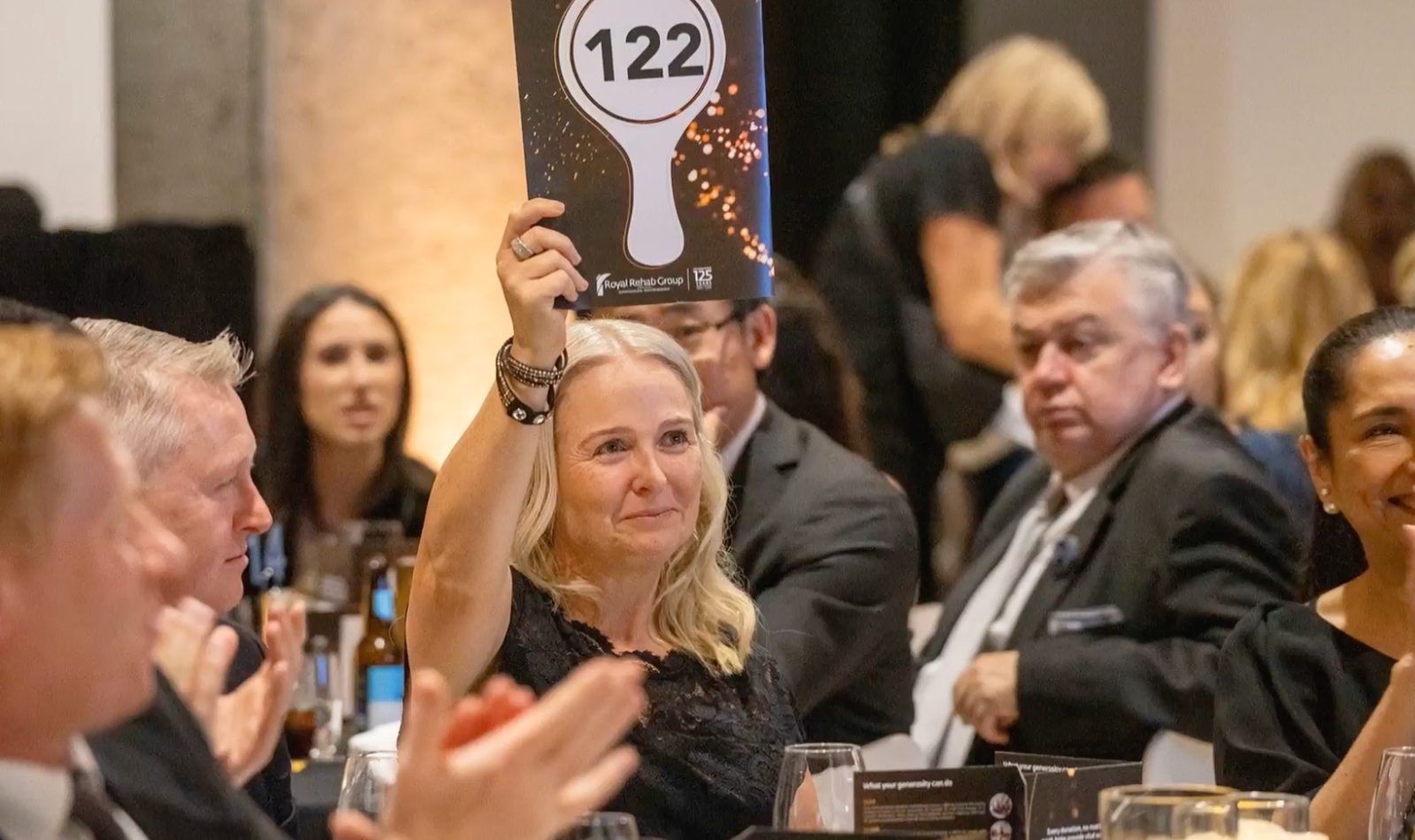
Do not let guests see your live lots for the first time when the auctioneer picks up the microphone. Publish the full lot list in advance on your event page with quality photos, videos and complete descriptions. Guests who arrive already wanting an item bid faster and higher.
List every live lot in your live auction software alongside your silent auction items. Guests browsing the catalogue on their phones before and during the event see the live lots with full photos, videos, descriptions and terms, which builds anticipation well before the auctioneer starts.
Then open pre-bidding on your live lots. Letting supporters bid online in the days before the event does four things at once:
It sets a real floor. Instead of the auctioneer coaxing the room up from a cold start, bidding opens at the highest pre-bid. Lots that open at a meaningful number sell higher.
It brings absent supporters into the auction. People who cannot attend the event can still compete for the headline lots, which turns a room of two hundred bidders into a much larger pool.
It shows you which lots are hot. Pre-bid activity is live market research. A lot attracting heavy pre-bids might earn a better slot in your sequence, and a lot attracting none might need a stronger pitch or a rethink.
It arms the auctioneer. Opening a lot with "bidding starts at two thousand, already on the board from an online bidder" creates instant urgency in the room.
One operational detail: switch pre-bidding off on each live lot before the auctioneer takes over, so online bids close and the room takes it from there. In GalaBid this is a per-item setting your team toggles just before the auction starts.
On the night, prepare a slide for each lot and show it on the big screen while that lot is under the hammer. Keep slides simple: one striking image, the lot number, the item name and three or four bullet points of key inclusions. Guests glance at the screen to confirm details while the auctioneer talks, which keeps them bidding instead of leaning across the table to ask what exactly is included in the golf day. Have someone assigned to advance the slides in sync with the auctioneer, and include a holding slide listing all lots to display before the auction begins.
For experience-based items, video makes a real difference. A thirty-second clip of the villa, the stadium tunnel or the vineyard conveys what a static photo cannot. Play it on the big screen as the lot opens.
Step 6: Decide how guests bid, and use bid spotters
Not every event uses paddles, and not every event needs them. Raised hands work perfectly well at smaller events and more informal rooms, where the auctioneer can see everyone and knows half the guests by name. The trade-off arrives with scale: at anything beyond a few tables, a raised hand is easy to miss and hard to attribute, and "sold to the gentleman near the back" is not a name your finance team can invoice.
Numbered paddles solve both problems at larger events. Hand them out at check-in and keep a register of which paddle number belongs to which guest, so that when the hammer falls on paddle 15 you know exactly who owes you for the Fiji trip. If paddles feel like overkill for your event, a simple alternative is having a volunteer note the winner's name and table number the moment each lot closes. Whatever method you choose, announce it at the start of the auction so the room knows how to bid.
Even with paddles, the auctioneer physically cannot see every bid. Stage lighting, room layout and pillars all hide bidders, and a missed bid is money left on the table.
Bid spotters solve this. Position two to four volunteers around the room, each watching an assigned zone. When they see a bid the auctioneer has missed, they call it and point. Brief them beforehand on the signal to use and which zone is theirs, and make them visible: a sash, a coloured jacket or simply standing rather than sitting.
Spotters do a second job as energy carriers. A spotter who reacts to a big bid, encourages a wavering table or applauds a winner keeps the atmosphere competitive. Some events assign a "cheerleader" to each table for exactly this reason: when two or three tables start competing for a lot, friendly rivalry reliably pushes the price up.
Step 7: Record winning bids and take payment properly
The final hammer price means nothing until it is collected. Every experienced fundraiser has a story about the winning bidder who was very enthusiastic at 9pm and very unreachable by Wednesday, and end-of-night payment queues are where live auctions traditionally go to die.
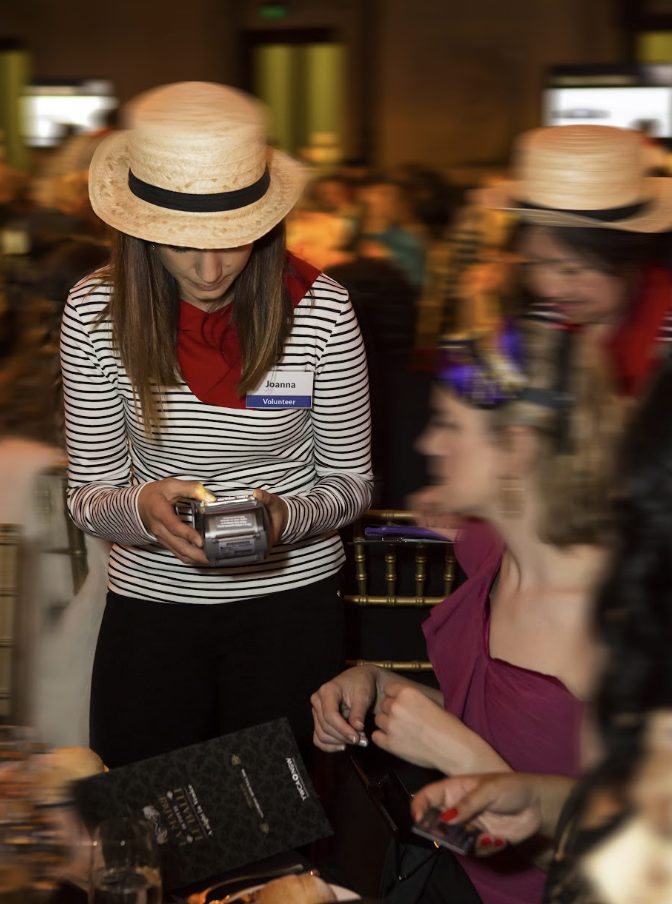
The clean way to handle it: record each winning bid digitally the moment the hammer falls, using volunteers equipped with the platform's volunteer mode. A volunteer logged into a volunteer account on a phone or tablet opens the lot, enters the winner and the hammer price, and either takes card payment on the spot or adds the amount to the winner's invoice alongside their silent auction wins and raffle tickets, settled in one transaction before they leave. Volunteer accounts keep this separate from your admin dashboard, so helpers can process winners without access to campaign settings.
Assign one volunteer per two or three lots and have them reach the winner as soon as the hammer falls, while the guest is still riding the high of victory and before their spouse has run the numbers. If a lot sells twice, the same lot can carry multiple winners, each invoiced at the agreed price.
This removes the cash box, the paper reconciliation and the polite-but-increasingly-firm email chain the following week. If you are running your event on GalaBid, the step-by-step process for setting up volunteer accounts, entering winning live bids and taking payment is covered in the help centre guide to live auctions at events.
Step 8: Follow up after the event
Within a few days of the event:
Confirm fulfilment details with every winner: voucher delivery, booking contacts, expiry dates.
Thank donors of items with specifics on what their item raised. It is the single best way to secure the same item again next year.
Record results per lot. Which items flew and which stalled tells you exactly what to source next time.
Collect testimonials. Ask this year's winners about their experience once they have redeemed it. Their words become next year's selling ammunition.
Live auction FAQs
How many items should a live auction have?
Five to eight. Fewer is fine for smaller events. More than eight and the room fatigues, which lowers the average price per lot.
How long should a live auction take?
Twenty to thirty minutes for a well-run auction of five to eight lots. Each lot should take three to four minutes.
Is a professional auctioneer worth the cost?
Usually, yes. The auctioneer is the biggest variable in your result, and at events with high-value lots a good charity auction specialist typically raises far more than their fee. For smaller events, a confident and well-briefed MC can do the job.
What is the difference between a live auction and a silent auction?
A live auction is led by an auctioneer with guests bidding in person by raising a hand or paddle. A silent auction runs over a longer period with guests bidding independently, usually on their phones. Most fundraising events combine both.
Can you take bids on live auction items before the event?
Yes. Pre-bidding lets supporters bid on live lots online in advance. The highest pre-bid becomes the starting point in the room. Pre-bidding is switched off before the auctioneer takes over.
How do you record live auction bids and take payment?
Record each winning bid digitally as the hammer falls, then take payment by card on the spot or add it to the winner's combined event invoice. This avoids end-of-night queues and post-event chasing.
Can you sell a live auction item twice?
Yes, when a second identical item is available. If two bidders battle to a high price, the auctioneer can offer the lot to both bidders at the final price, doubling the result. Confirm availability before the event, especially for consignment items, and record both winners against the lot.
Should the auctioneer also run the paddle raise?
Yes, in most cases. The auctioneer already has the microphone and the room's energy immediately after the final lot, which is the ideal moment for a paddle raise. Brief them on the cause story and giving levels alongside the auction lots.