
The Post-Event Fundraising Checklist
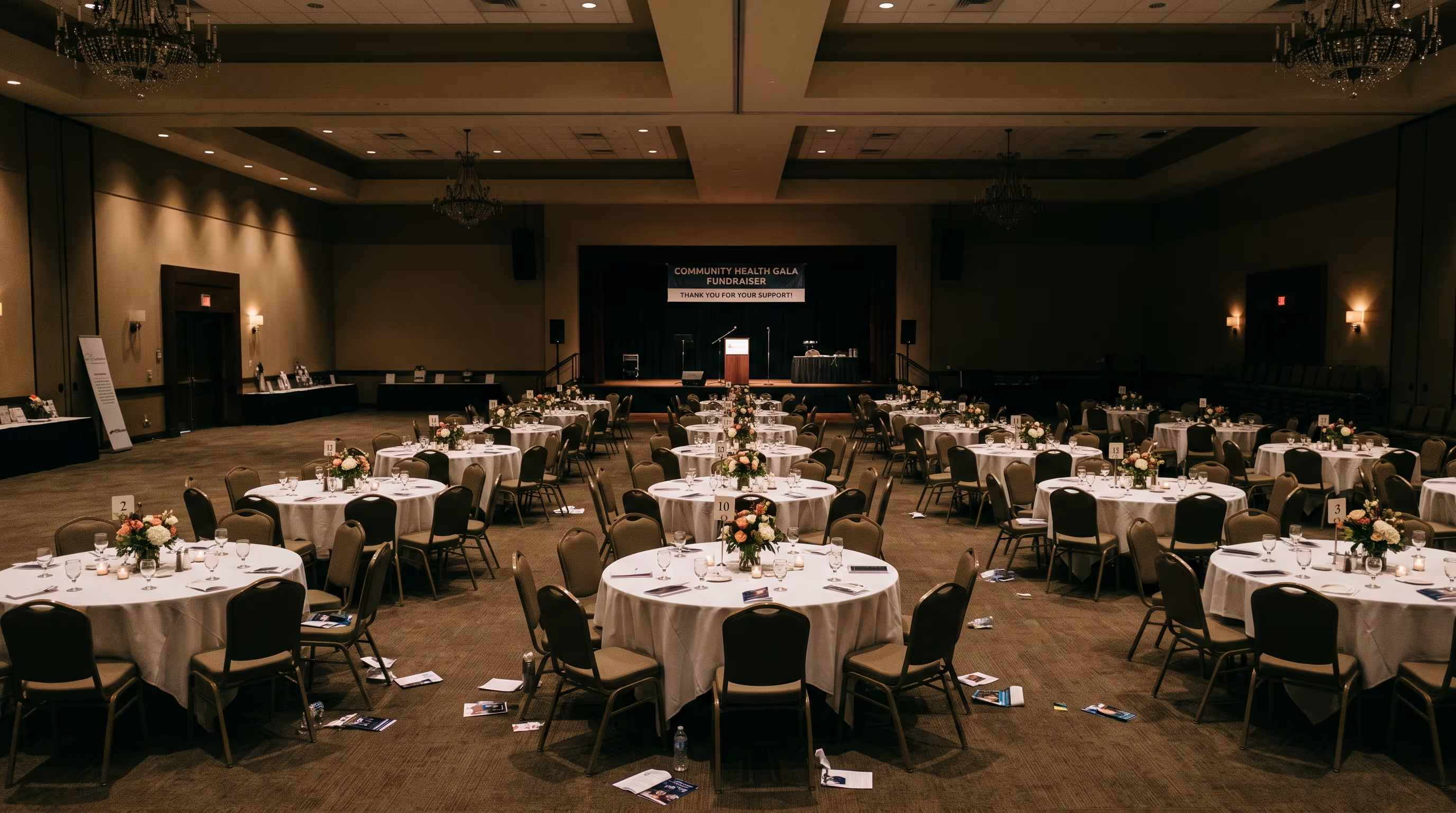
The last guest has left. The room is quiet. You're exhausted, probably elated, and very possibly still holding a half-eaten dessert you never got to finish.
Everything that came before this moment had a plan behind it, the venue booking, the auction items, the raffle setup, the volunteer briefing, the MC notes. The post-event period is different. In the years I've spent building event tools alongside nonprofit teams, this is consistently the least structured part of the whole process — which is exactly why things fall through the cracks: unpaid invoices that never get chased, raffle winners who never hear back, donors who never learn how the night went, and data that quietly disappears before next year's planning even starts.
This checklist walks through everything that needs to happen after a fundraising event, in the order it should happen.
Quick checklist: post-event tasks at a glance
In the 24 Hours After the Event
Chase outstanding payments immediately
This is the single most time-sensitive task on the list. Every hour that passes makes an unpaid invoice harder to collect. Guests are back in their normal lives, the energy of the night has faded, and a payment that felt like a given in the room can quietly get pushed aside.
Do this the morning after the event, not at the end of the week, response rates drop the longer you wait. In GalaBid's Checkout Console, you can see the payment status of every participant at a glance, and send reminders individually or in bulk to everyone with an outstanding balance, with a direct link to their invoice.
Confirm all raffle winners have been notified
GalaBid notifies raffle winners automatically by email or SMS the moment the draw is made, so this is usually already handled. Still, check the Raffle Tickets and Winners report to confirm every prize has a named winner and the notification actually landed. If a prize requires physical handover or booking, flag which winners you haven't heard back from and set a 48-hour follow-up.
Confirm all auction winners are recorded correctly
Pull the Summary report, which lists every auction item, the winning bidder, the winning bid, and payment status. Cross-check it against any live-auction bids volunteers entered manually on the night, this is where errors most often creep in. If any live-auction items were settled outside the platform (a separate cash payment or EFTPOS terminal, for example), document them consistently with everything else.
Process any refunds that are needed
A duplicate bid gets entered, a guest is charged incorrectly, an item turns out to be unavailable. Refunds can be processed from the Checkout Console's payments section — search the participant, find the payment, initiate the refund. Stripe fees on the original transaction aren't refundable, and partial refunds need to go through Stripe directly rather than the platform.
Handle refund requests promptly. A guest who had to follow up twice about money they're owed remembers that, and it colors how they feel about your organisation going forward.
In the First Week
Download and archive your full reports
Before you do anything else, pull a complete offline record of the event:
- Invoices report — every participant's contact details, items won or purchased, amounts paid and outstanding.
- Payments report — all transactions including taxes, processing fees, refunds, and net profit. This is your financial source of truth.
- Summary report — a breakdown by activity: auction, raffle, donations, buy-now purchases.
- Bids and Buys report — every bid, donation, and raffle ticket purchase with timestamps, useful for spotting your most engaged participants.
- Raffle Tickets and Winners report — ticket numbers sold against tickets drawn.
- Participants report — full registration details.
Download these as Excel files and store them in your own records, even if the platform retains the data. Having your own copy matters for auditing and year-on-year comparison.
Dispatch prizes and fulfil items
The clock on fulfilment starts the moment the event ends. Delayed prizes are one of the most common sources of post-event complaints — and they measurably affect whether a winner shows up next year.
Prioritise contact with every winner within five to seven days. If an item needs booking (a travel package, a restaurant experience, a ticketed event), make sure the winner has clear instructions and a contact point, and set a reminder to follow up if they haven't booked within a reasonable window. If you're using GalaBid, the Checkout Console tracks dispatch status per invoice and can send custom vouchers automatically once payment clears; for consignment items sourced through GalaBid's catalogue, the bookings team handles winner fulfilment directly.
Send your thank-you communications
Send a thank-you email to every attendee within 48–72 hours. This isn't a courtesy — it's one of the highest-leverage things you'll do for next year's fundraising.
Include a genuine expression of gratitude, the total raised, a concrete note on what that figure achieves, and recognition of sponsors, major donors, and volunteers. Keep it specific rather than generic — a note that tells a donor exactly what their contribution makes possible lands differently than a form letter.
For your highest-value donors, table sponsors, and big-spending auction winners, a personalised note from a senior person in your organisation carries real weight. These are the people most likely to return next year and bring others with them. Thank your volunteers separately and specifically, too — a team that feels appreciated shows up again.
Acknowledge sponsors publicly
Follow through on whatever recognition you committed to during planning: a social media mention, a logo in your thank-you email, a feature on your campaign page, or a personal note to the sponsor's key contact. Sponsors judge their investment partly on tangible return and partly on how the experience felt, an organisation that follows through promptly is one they'll back again.
In the First Month
Reconcile your financials fully
Once outstanding payments are collected, refunds processed, and payouts cleared to your bank account, complete a full reconciliation: gross revenue by activity (silent auction, live auction, raffle, paddle raise, donations, ticket sales), processing fees, platform and consignment costs, and net funds raised.
Compare this against your pre-event projections. Where did you beat expectations, and where did you fall short? Those answers are the most useful input you have for next year.
Debrief your team
While memories are fresh, bring your core team together. Cover what worked, what created friction, any technology issues and how they were resolved, volunteer feedback on the guest experience, and any patterns worth digging into further.
Write the debrief down — not just action items, but a narrative account of the night. This document is invaluable when next year's planning team includes people who weren't there this time.
Review your data for next year
Before closing out the campaign, look at the data with a planning lens, not just a reconciliation one:
- Which auction items generated the most bids and the biggest jump above starting price? Prioritise those next year.
- Which items got little or no bidding, and why — the item itself, the starting price, the description, its placement in the catalogue?
- How did raffle ticket sales split between pre-event and on-the-night windows? A high pre-event share means open sales earlier and promote them harder next time.
- What was the average donation per guest across all activities? Useful for forecasting and for tracking whether your guest profile is shifting.
- How many attendees were first-timers versus returning supporters? That ratio tells you the health of your pipeline.
Reviewing these analytically, not just for compliance, is what separates organisations that plateau from ones that grow their fundraising year over year.
Report back to your supporters
Once you have a clear, verified total, communicate it publicly: a social post, an email to your full list, a campaign page update, and, where appropriate, a note to local media.
The message that matters isn't the number on its own — it's what the number means: how many people it supports, what programme it funds. Closing that loop is what turns a one-time donor into a repeat one.
Next Year Starts Now
The strongest fundraising organisations don't wait three months out to start thinking about next year. The weeks right after an event are when your energy is highest, your lessons are freshest, and your relationships with donors and sponsors are most active. Use that window to lock in next year's date before venues fill up, have early conversations with sponsors while your event's value is still visible to them, and capture any prize leads or ideas that came up during the debrief while they're still front of mind.
Frequently Asked Questions
How soon should you send thank-you emails after a fundraising event? Within 48–72 hours. Waiting longer noticeably reduces how personal and timely it feels to recipients, and it delays the moment donors learn what their contribution achieved.
How long do you have to collect on unpaid auction or raffle invoices? There's no hard deadline, but response rates drop the longer you wait. Send reminders the morning after the event rather than the end of the week, and follow up again within 48 hours if there's no response.
What should be included in a post-gala report to donors? The total raised, a concrete statement of what that total will fund or support, and recognition of major donors, sponsors, and volunteers by name where appropriate.
How do you follow up with silent auction or raffle winners who don't respond? Set a follow-up trigger for 48 hours after the initial notification, and prioritise direct outreach (phone or personal email) for any item that requires booking or physical handover, since these are the ones most likely to stall.
Should you tell donors if the event fell short of its fundraising goal? Transparency about the outcome, whether the event beat or missed projections, is part of what builds long-term donor trust. Reporting the honest number, alongside what it will still fund, tends to serve the relationship better than downplaying a shortfall.
About the author - Peter Hair is co-founder of GalaBid, a fundraising platform trusted by over 25,000 charities, schools and clubs across Australia, New Zealand, the UK, US, Canada and Europe since 2011. GalaBid has helped good causes raise over $500 million through silent auctions, raffles, ticketing and donation campaigns. Peter writes about what actually works at real fundraising events.