
Selling a big-ticket item, a luxury travel package, a signature experience, more than once at your next auction can significantly increase what a single item raises. Instead of one winner and one payment, you end up with two or three winners each paying close to what they were willing to bid. Here's how to do it properly, and where it can go wrong.
How selling multiples actually works
The idea is simple: instead of a single winner taking the item at the top bid, you sell it to two or three of the highest bidders at once, usually at or near the top bid amount. If bidding on a package reaches $3,500 with a second bidder still willing to pay $3,000 rather than drop out, offering to sell to both means you walk away with $6,500 instead of $3,500, and both bidders leave happy rather than one winner and one disappointed runner-up.
This only works if you can actually fulfil more than one of the item. That means securing multiples at the sourcing stage, not deciding on the night that you'd like to sell an item twice.
This is exactly where items on consignment earn their keep
Sourcing two or three of the same donated item from a single donor isn't always realistic, most people are willing to give once, not three times. This is where a no-risk consignment provider is genuinely useful, these packages are built specifically to be sold multiple times, with no upfront cost and no extra procurement effort on your part. It removes the sourcing problem entirely and means you can plan for a multiple sale with confidence rather than hoping a donor says yes to a second ask.
Beyond consignment, you can also ask a donor directly if they'd offer a second version of the same experience, a second dinner for two, a second weekend stay, a lower-commitment ask than requesting two full donations upfront. If neither is available and demand is clearly there on the night, purchasing an additional unit afterward to fulfil a second sale is an option too, though it's the least predictable of the three.
Choose your items carefully, not every item is a good fit
Selling multiples works best on your true signature items, the ones generating real competitive bidding well above their cost, not every item in your catalogue. Decide in advance which items are eligible and at what bid level, rather than making the call in the moment. Bidder behaviour can also shift once people sense an item might be sold more than once, some will aim for third place at a lower price rather than pushing for the top bid, which can soften competition if it's not handled carefully. Reserving this for a small number of clearly high-demand items, and not announcing it too early, keeps that risk to a minimum.
Be upfront or be very careful
This is the part worth taking most seriously. Most bidders in the live auction assume they are competing for a single item. If a second one suddenly appears as available partway through a live auction, it can feel like the goalposts moved, even if the outcome is good news for them. Handle this transparently and it lands as a genuine bonus. Handle it clumsily and bidders can feel hoodwinked, like they were pushed into paying full price for something they thought was scarce.
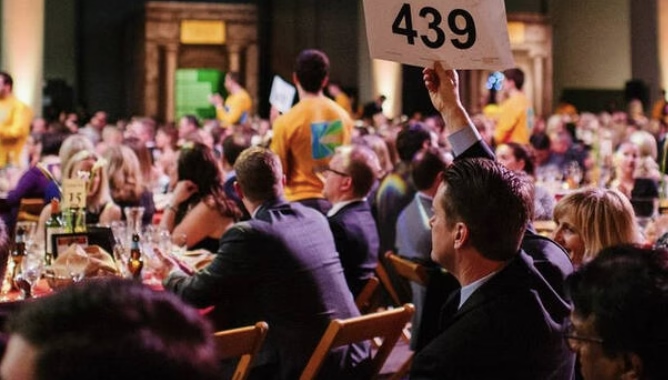
The key test is whether the second (or third) bidder feels they've been offered something exciting, not pressured into taking it. A good auctioneer frames it as an offer, not an obligation, "we're lucky enough to be able to offer this to you too, would you like it at the same price?", giving the bidder a genuine choice rather than assuming the sale. If a bidder declines, that needs to be accepted gracefully, not pushed. For a live auction specifically, this only works if the auctioneer is confident handling that moment well.
For a silent auction
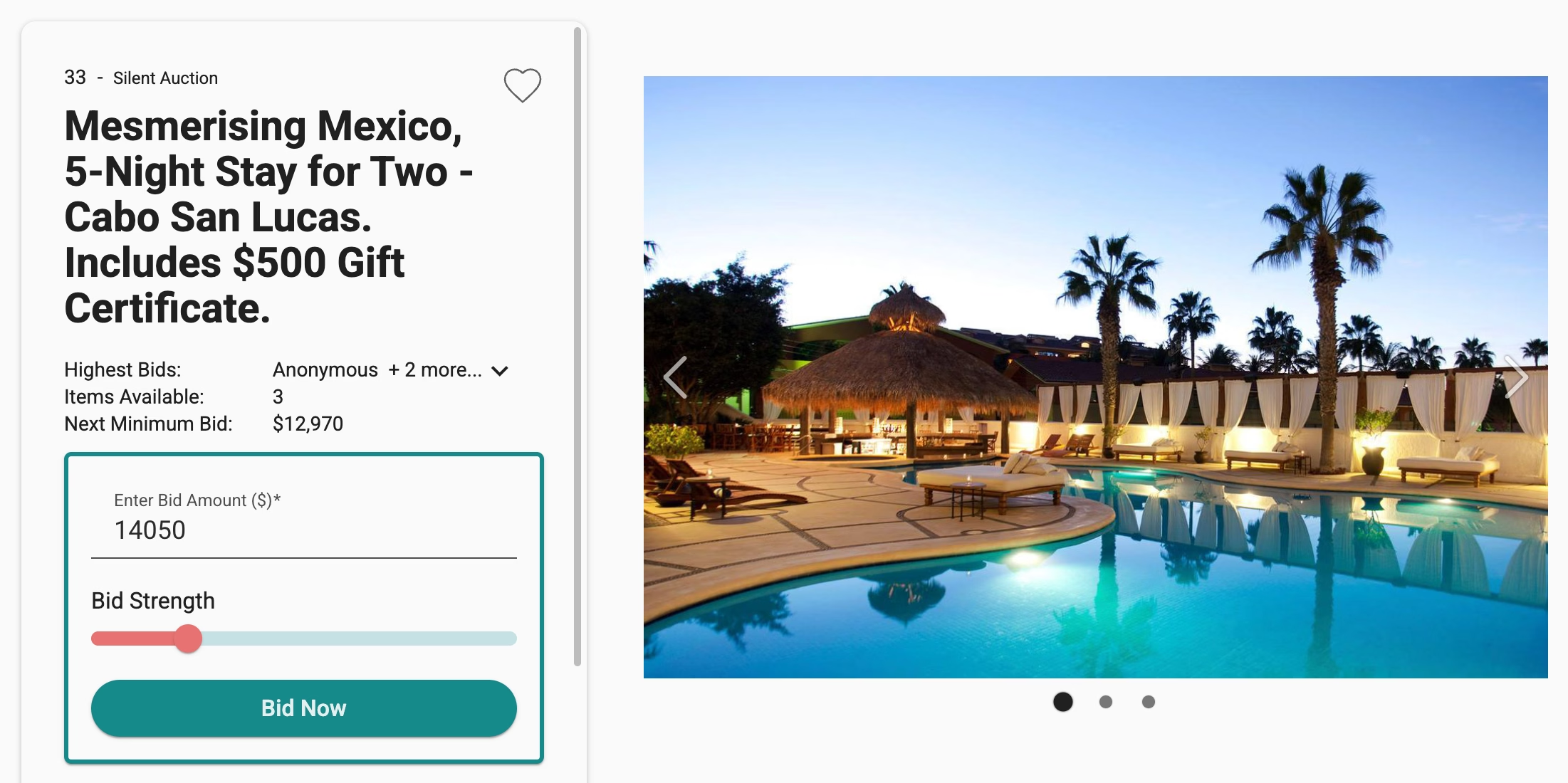
The same principle works for a silent auction, but bidders need to understand the rules from the very start, not find out partway through. List the item with the number of available packages stated plainly on the item description itself, before bidding even opens. Make clear that the winning bidders are simply the top two or three, each paying what they individually bid, not a single shared price. A short, plain line on your silent auction platform pis enough: "Two of this package are available. The two highest bidders at close will each win one, paying their own bid amount." Because there's no auctioneer to read the room, being explicit upfront matters even more here than in a live setting, transparency has to be built into the listing itself.
Keep your team in the loop
Make sure staff and volunteers know which items are eligible to be sold multiple times before the event starts, so they can answer guest questions confidently and explain the arrangement clearly if anyone's unsure. And if you do sell an item more than once, make sure you have enough vouchers or fulfilment details ready for every winner, not just one, running out mid-handout looks unprofessional and undercuts the excitement you've just created.
Where to next
Once you know which items are worth selling multiple times, how you display and present them matters just as much. Our guide to best practice for your onsite auction display covers how to make your signature items stand out and draw the kind of competitive bidding that makes selling multiples worth doing in the first place.