Practical Ways Fundraisers Can Use AI

Artificial intelligence has moved from being a technology mostly associated with large organisations and specialist teams to becoming an everyday tool that people use for work, creativity and problem-solving.
Tools powered by AI can now help with tasks such as writing, research, image creation, data analysis and planning. For fundraising teams, this creates new opportunities to save time and work more efficiently, particularly when resources are limited and there are always more tasks than hours in the day.
However, the value of AI is not in replacing the expertise, creativity or relationships that sit at the heart of fundraising. Successful fundraising still depends on understanding your supporters, telling meaningful stories and building genuine connections.
AI is most valuable when it helps fundraisers solve real, everyday challenges. The goal is not to hand over your fundraising strategy to a tool, but to use AI as a practical assistant. to speed up repetitive tasks, generate ideas, improve the quality of your work and create more time for the activities that make the biggest difference.
From creating campaign content and writing supporter communications to planning events and developing auction materials, there are many ways charities and nonprofit organisations can use AI today.
1. Create Fundraising Communications Faster
Writing regular communications is essential for building relationships with supporters, but it can also be time-consuming.
AI can help fundraisers create a first draft for:
- Donor thank-you emails
- Campaign updates
- Event invitations
- Social media posts
- Sponsorship communications
- Volunteer messages
For example, instead of spending time staring at a blank page, a fundraiser can provide AI with the key details:
"Write a warm thank-you email to supporters who attended our charity gala. The event raised funds for childhood cancer research. The tone should be grateful, personal and inspiring."
AI can quickly produce a starting point that the fundraiser can refine with their own stories and organisational voice.
The most effective approach is to use AI for efficiency, while adding the human details that make fundraising communications meaningful.
2. Write Better Auction Item Descriptions
For organisations running fundraising auctions, writing compelling item descriptions can have a significant impact on supporter engagement. A simple description tells people what an item is:
"Weekend accommodation package at a local hotel."
A stronger description helps supporters imagine the experience:
"Escape for a relaxing weekend away with a luxury accommodation package, giving you the perfect opportunity to unwind and enjoy a memorable getaway."
AI can help transform basic information into engaging auction copy by highlighting:
- The experience and emotion behind the item
- Key features and benefits
- What makes the item unique
- Why supporters will want to bid
Fundraisers can provide details such as the item name, donor, retail value and important features, then use AI to create a polished first draft ready for review.
3. Generate Fundraising Ideas and Campaign Concepts
Coming up with fresh fundraising ideas can be challenging, particularly for small teams managing multiple priorities.
AI can act as a brainstorming partner by helping generate ideas for:
- Fundraising event themes
- Campaign names
- Auction concepts
- Social media campaigns
- Donor engagement activities
- Sponsorship opportunities
For example, a school planning a fundraising event could ask:
"Suggest 10 creative fundraising ideas for a primary school community event with a focus on family participation."
The results won't replace the creativity and knowledge of your team, but they can provide inspiration and new directions to explore.
4. Plan Fundraising Events More Efficiently
Successful fundraising events involve hundreds of small details, from timelines and communications to volunteer coordination and event logistics.
AI can help create practical planning resources, including:
- Event run sheets
- Project timelines
- Volunteer schedules
- Task lists
- Communication calendars
- Checklists
For example:
"Create a fundraising gala timeline covering the six months before the event, including sponsorship, guest communications, auction preparation and event-day tasks."
Instead of building everything from scratch, your team can use AI to create a framework and then customise it based on your event.
5. Improve Supporter Communications
One of the strengths of AI is its ability to adapt content for different audiences.
The same fundraising message may need to sound different depending on who receives it.
AI can help tailor communications for:
- First-time donors
- Long-term supporters
- Corporate partners
- Event attendees
- Volunteers
- Community members
For example, a message to a major donor may focus on impact and outcomes, while a message to a new supporter may focus on introducing your mission and building connection.
The important part is that your organisation provides the strategy, audience understanding and emotional context. AI helps with the execution.
6. Create Visual Content and Campaign Assets
Strong visuals can make fundraising campaigns more engaging, but many organisations don't have access to professional design resources.
AI image tools can help create concepts and assets such as:
- Event banners
- Social media graphics
- Campaign imagery
- Auction item visuals
- Promotional materials
For smaller fundraising teams, this can reduce the time and cost involved in creating professional-looking campaign materials.
However, AI-generated images should still be reviewed carefully. Authentic photos of your supporters, beneficiaries and events will often create a stronger emotional connection than generic imagery.
7. Support Fundraising Research and Planning
AI can also help teams organise information and prepare for campaigns.
Examples include:
- Summarising research
- Creating supporter personas
- Reviewing campaign ideas
- Preparing meeting notes
- Identifying content opportunities
- Drafting reports
This can be especially helpful for small teams where one person may be responsible for many different aspects of fundraising.
Example AI Prompts for Fundraisers
The quality of AI output depends heavily on the information you provide. Clear prompts lead to better results.
Instead of:
"Write a fundraising email."
Try:
"Write a 250-word fundraising email for previous event attendees. The goal is to encourage registrations for our annual charity auction. The tone should be warm and personal. Highlight the impact of their previous support and include a clear call to action."
Other useful prompts include:
For social media:
"Create five Instagram captions promoting our charity fundraising event. The audience is past supporters and the tone should be enthusiastic and community-focused."
For auction items:
"Write an engaging auction description for a luxury weekend getaway. Highlight the experience, value and reasons supporters would want to bid."
For event planning:
"Create a fundraising event checklist covering tasks from three months before the event through to post-event follow-up."
The key takeaway
AI works best as a fundraising assistant, not a replacement for fundraising expertise.
The organisations that benefit most will be those that combine AI efficiency with the things AI cannot create: genuine stories, authentic relationships and a deep understanding of their supporters.
Using AI Without Losing Your Fundraising Voice
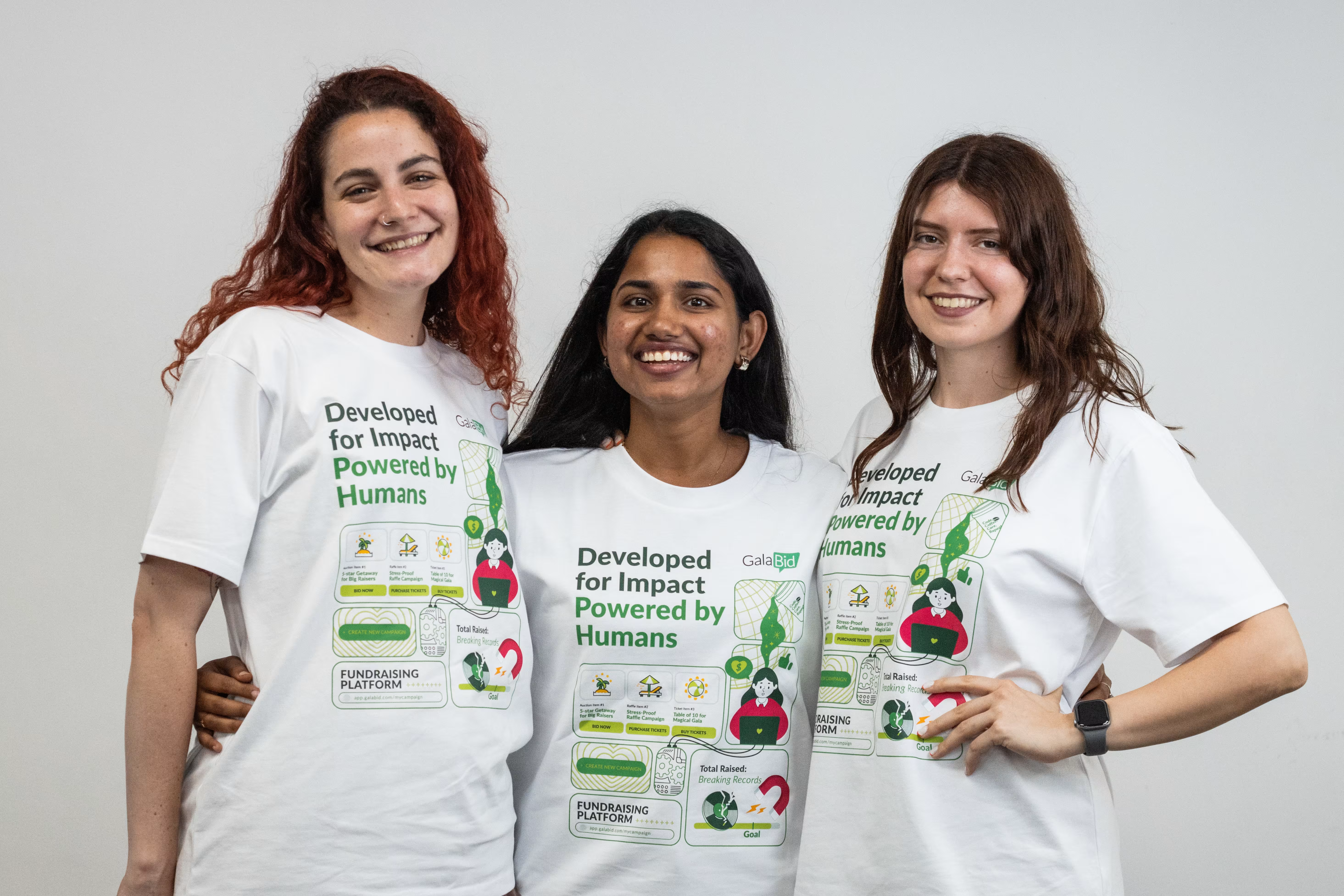
As AI becomes more widely used, one of the biggest challenges for charities and nonprofit organisations will be maintaining authenticity. AI can help create content quickly, but if every organisation uses the same tools in the same way, fundraising communications can start to feel generic.
Supporters don't connect with organisations because of perfectly polished words. They connect because of the people, stories and purpose behind the cause. The most effective fundraising content combines the efficiency of AI with the human experiences that make your organisation unique.
Think of AI as a creative assistant. It can help you find the words, generate ideas and save time, but your team provides the emotion, perspective and purpose.
Why AI Content Can Sometimes Feel Generic (and Why it Matters)
As AI tools become part of everyday work and communication, people are becoming increasingly familiar with the way AI-generated content sounds.
Many of us now interact with AI regularly, whether through search tools, customer service chatbots, writing assistants or content recommendations. As a result, many people are becoming better at recognising when something feels overly polished, generic or disconnected from a real human voice.
For fundraising organisations, this matters because trust and authenticity are central to supporter relationships. A perfectly structured message is not enough on its own. Supporters want to feel that they are hearing from real people who understand the cause, not receiving a generic message that could have been written for any organisation.
AI tools are trained on large amounts of existing information, which means they are very good at recognising patterns, creating structure and producing clear, well-written content. However, that same strength can sometimes lead to content that relies on familiar phrases, predictable language or broad statements that lack personality.
The challenge is not avoiding AI altogether, it is learning how to use it effectively while maintaining your organisation’s unique voice.
Common signs that content may feel AI-generated include:
Generic introductions
AI often starts with broad statements that sound professional but lack personality.
Examples:
- "In today's rapidly changing world..."
- "Fundraising has never been more important..."
- "Together, we can make a difference..."
These phrases aren't necessarily wrong, but they are commonly used and may not immediately capture attention.
A stronger opening usually starts with something specific:
- A real supporter story
- A fundraising milestone
- A meaningful moment
- A clear challenge your community understands
Too many buzzwords
AI can sometimes overuse words that sound impressive but don't add much meaning.
Examples include:
- Empower
- Transform
- Innovative
- Leverage
- Seamless
- Unlock
- Journey
- Impactful
Strong fundraising writing often uses simpler, more direct language.
Compare:
Generic:
"Your generous support empowers us to transform lives through innovative solutions."
More personal:
"Because of supporters like you, families facing childhood cancer can access vital research and better treatment options."
The second example feels more meaningful because it connects the supporter directly to the outcome.
A lack of specific details
AI can create technically correct content, but it doesn't automatically know what makes your organisation special.
Compare:
Generic:
"Your donation helps children and families when they need it most."
Specific:
"Your support helps fund research that brings doctors closer to finding safer, more effective treatments for children with neuroblastoma."
The second message works because it includes the details only your organisation can provide.
How to Make AI-Generated Content Sound Like Your Organisation
The best AI results come when you provide strong guidance and context. While AI tools can generate content quickly, they don't automatically understand your organisation's mission, your supporters or the emotions behind your work.
AI doesn't necessarily know what makes your nonprofit unique unless you tell it. Your stories, experiences, values and knowledge of your community are what transform generic AI-generated content into meaningful communication.
Think of AI as a new team member. Like any new colleague, it needs to understand your organisation before it can communicate effectively on your behalf. The more information you provide, including your audience, your goals, your tone of voice and the specific details of your campaign, the more relevant and authentic the results will be.
The most effective fundraisers use AI as a starting point, not a final answer. They use technology to speed up the drafting process, then add their own insight, personality and storytelling to create content that genuinely connects with supporters.
Here are some practical ways to make sure your AI-generated content reflects your charity's voice:
Start with your own stories
Before asking AI to write, think about what makes your organisation unique.
Include details such as:
- Why your organisation exists
- Who you support
- The challenges your community faces
- Real examples of impact
- Stories from supporters or beneficiaries
- The emotions you want people to feel
The more context you provide, the less generic the result will be.
Define your tone of voice
Every organisation has a different personality.
Your communications may be:
- Warm and personal
- Hopeful and inspiring
- Professional and informative
- Community-focused
- Energetic and fun
Tell AI how you want content to sound.
For example:
"Write this in a warm, compassionate tone that feels personal and hopeful. Avoid corporate language and focus on the human impact."
This helps AI create content that better reflects your brand.
Always add a human review
AI-generated content should be treated as a starting point, not the finished product.
Before publishing, ask:
- Does this sound like us?
- Would our supporters recognise our voice?
- Does it include specific details?
- Does it feel genuine?
- Is the emotion appropriate?
A few minutes of editing can transform a generic AI draft into authentic fundraising communication.
AI Should Enhance Your Voice, Not Replace It
The organisations that use AI most effectively will not be those that produce the most content. They will be the ones that use technology thoughtfully while maintaining genuine connections with supporters.
AI can help you write faster, plan better and reduce administration, but your stories, values and relationships are what inspire people to take action.
The future of fundraising isn't about choosing between technology and human connection. It's about using better tools to create more time for the human moments that matter most.
How GalaBid Uses AI to Help Fundraisers
AI is most valuable when it solves real challenges faced by fundraising teams.
At GalaBid, our focus is on using technology to make fundraising simpler, more efficient and more accessible, especially for organisations that may not have dedicated marketing, design or communications resources.
By bringing AI-powered tools directly into the fundraising platform, GalaBid helps teams spend less time on repetitive tasks and more time engaging supporters and delivering successful campaigns.
Create Professional Campaign Materials Faster
Creating visually appealing fundraising campaigns takes time, particularly for smaller teams that may not have access to graphic designers or specialist tools.
GalaBid's AI tools help fundraisers create professional campaign assets quickly, including:
- Campaign banners
- Event graphics
- Fundraising visuals
- Custom images
Instead of spending hours searching for design inspiration or learning new software, fundraisers can use AI to generate ideas and create campaign materials that align with their event or fundraising goal.
The result is a more polished supporter experience without requiring advanced design skills.
Write Engaging Auction Item Descriptions
A great auction item description does more than list features, it helps supporters imagine the experience and understand why they should bid. However, writing descriptions for dozens of auction items can be one of the more time-consuming parts of event preparation.
GalaBid's AI-powered auction description tools help transform basic item details into engaging, ready-to-edit descriptions.
Fundraisers can provide information such as:
- The item or experience
- The donor or supplier
- Key features
- Value or inclusions
- Any important details
AI then helps create polished copy that can be reviewed and personalised before publishing.
This means teams can spend less time writing listings and more time focusing on sourcing great items and engaging supporters.
Helping Fundraisers Do More With Less
Many fundraising teams operate with limited time and resources. Technology that reduces administrative tasks can make a significant difference.
AI is one part of a broader shift towards smarter fundraising technology, helping organisations streamline processes, improve supporter experiences and create more opportunities to raise funds.
The most successful fundraising campaigns will always depend on human connection, compelling stories and genuine relationships. AI simply helps teams bring those ideas to life more efficiently.
Getting Started With AI for Fundraising
You don't need to become an AI expert to start using AI effectively.
The best approach is to begin with small, practical tasks:
- Ask your AI platform or agent to help draft your next supporter email
- Use it to brainstorm campaign ideas
- Create a first draft of an auction description
- Develop an event checklist
- Explore ways to improve your fundraising communications
As you become more comfortable, you can identify where AI can save your team the most time.
The organisations that benefit most from AI will be those that combine new technology with what they already do best: understanding their supporters, telling meaningful stories and creating experiences that bring communities together.
Final Thoughts
AI is not replacing the work of fundraisers, it is helping them work smarter.
From creating campaign content and auction descriptions to planning events and improving supporter communications, AI can reduce the time spent on everyday tasks and allow fundraising teams to focus on building relationships.
For charities and nonprofit organisations, the opportunity is not simply using AI because it is new. It is using AI thoughtfully to create better experiences, engage supporters more effectively and make every fundraising effort count.
When technology supports human connection, fundraising becomes more powerful, not less personal.